
Florida's 'Stop WOKE Act' May Put Corporate DEI Training into a 'Strategic Pause'
Florida Governor Ron DeSantis signed the 'Stop WOKE Act' on April 22, 2022, which takes effect on July 1, prohibiting public and private employers with 15 or more employees from teaching eight categories of concepts based on race, color, sex, and national origin in workplace training. Legal expert Cindy-Ann L. Thomas stated that businesses with operations or employees in Florida are subject to the law, and its vague wording may prompt employers to adopt a 'strategic pause' strategy. Meanwhile, plaintiffs, including DEI consultant Tami Hodo, have filed lawsuits, with a preliminary injunction hearing scheduled for June 21.
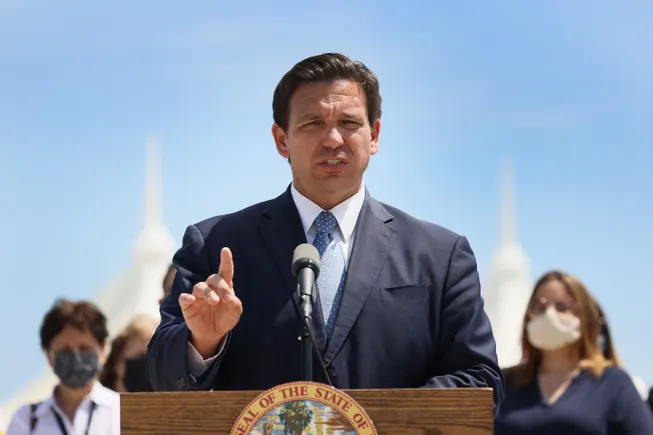
Employers' eyes are focused on a law passed by Florida lawmakers last month. The Stop WOKE Act follows more than a hundred similar bills targeting progressive teaching in public schools, but it goes further, restricting diversity, equity, and inclusion (DEI) training in the workplace.
Many employers outside Florida are also closely watching the Stop WOKE Act's progress to gauge broader trends. But some employers are carefully examining the details of the provisions to assess their potential impact. According to Cindy-Ann L. Thomas, a principal at Littler and co-chair of its EEO and Diversity practice group, many employers headquartered outside Florida will also be subject to the law. The law applies as long as a business has any operations or employees in Florida. And with the workforce mobility brought on by the recent rise of remote work, the likelihood of coverage is quite high.
The reaction to the Stop WOKE Act is as broad as its reach. Florida Governor Ron DeSantis praised the legislation as a victory for individual freedom, including freedom from "oppressive ideologies" such as critical race theory. At the same time, the bill has sparked strong protests from DEI practitioners, such as Florida consultant Tammy Hodo—who previously saw her business suffer due to former President Donald Trump's now-revoked executive order on diversity training for federal contractors.
Hodo predicts that, similar to Trump's executive order, the Stop WOKE Act will hinder workplace diversity training as intended. "It will stifle any conversation around DEI," she said. "I think companies will use this as an excuse to avoid those necessary discussions about inclusion."
As DEI practitioners and employers prepare for the impact, they need to consider the bill's provisions and plan accordingly. But Thomas noted that legal challenges to the law could complicate these plans, and employers need to closely monitor developments in the coming months.
Overview of the bill
On April 22, 2022, DeSantis signed the Stop Wrongs to Our Kids and Employees Act. The law, set to take effect on July 1, 2022, amends the Florida Civil Rights Act and the state's education statutes.
The law restricts the content that public and private employers with 15 or more employees can use in workplace training. Specifically, it prohibits employers from teaching eight concepts based on race, color, sex, and national origin. For example, the law prohibits employers from teaching that individuals of a certain race, color, sex, or national origin are "morally superior" to other groups. The law also states that employers cannot discriminate based on these characteristics to "achieve diversity, equity, or inclusion," and prohibits employers from suggesting that someone bears "personal responsibility and must feel guilt, anguish, or other forms of psychological distress" because of the "past actions" of a group with which they share characteristics.
Thomas said these prohibitions target exactly the topics that many DEI practitioners currently emphasize in workplace training.
DeSantis acknowledged this when signing the bill, even as he spoke triumphantly about the restrictions, surrounded by elementary and middle school students at a charter school outside Miami.
"We believe that a significant part of freedom in Florida is the freedom from having oppressive ideologies imposed on you without your consent," DeSantis said. "Whether in the classroom or in the workplace. We decided to take action."
Thomas said the bill allows employees who receive such training to file complaints with the Florida Commission on Human Relations and to file lawsuits seeking damages of up to $100,000.
Although DeSantis and supporters of the law celebrated its passage as a blow against critical race theory and other "harmful ideologies," Thomas and other sources interviewed by HR Dive expressed skepticism and frustration.
"This is a solution designed for a problem that doesn't exist," Thomas said, noting it was her personal opinion.
DEI consultant Hodo expressed similar views. "I think (supporters of the bill) think DEI training is about guilt and shame, but it's not." Hodo also questioned the law's focus on blame. "I don't know any real practitioner who does that," she said. "DEI training is about empathy, understanding, and education."
Alternative paths for DEI training
If the law takes effect in the form DeSantis signed, it will undoubtedly impact workplace diversity, equity, and inclusion training. But Thomas was quick to point out that the law does not completely prohibit such activities.
"The law does not prohibit DEI training," she said. "It just imposes many restrictions on certain topics, which will require employers to be more careful."
Thomas also noted that the bill could affect employers' equal employment opportunity (EEO) training. EEO training, while not labeled as DEI, sometimes includes components or case studies that explore related topics.
Diane P. Perez, a consultant at Littler, agreed. She explained that in 1998, the U.S. Supreme Court issued two important rulings on hostile work environments. The Court ruled that because employers cannot know about or control everything that happens in the workplace, employers can defend against such claims if they prove they made efforts to prevent and correct misconduct. Employers can establish this defense by implementing policies and holding annual training.
"But now this training is harder to conduct because someone might feel offended, which could create liability risk for the company," Perez said. "We can control the content of the training, but we cannot control how trainees feel, and that's the biggest problem."
Perez said that if the law takes effect as written, employers will have to weigh conducting training and risking violation of the Stop WOKE Act against not conducting training and losing the defense.
For employers who want to avoid legal trouble but continue training, Thomas said "the first and most conservative approach" is to complete all DEI training before the law takes effect. "That's the most practical thing I can say. It cannot be applied retroactively to anything before July 1."
Beyond that strategy, Thomas advised employers to review existing program content and score it against the legal restrictions. Examples used in training should be evaluated to ensure they are balanced and neutral, and to ensure they do not unfairly position one gender or race as perpetrators or victims of misconduct. Thomas emphasized that employers should review training content with legal counsel.
The law may also create opportunities to develop new training modules. "Under the law, they picked certain dimensions," Thomas said. The bill is specific and consistent in its use of race, color, sex, and national origin, but the Florida Civil Rights Act also includes other dimensions such as age and religion, Thomas noted. "So you can create new modules, so you can still have new conversations about bias, such as disability bias or religious bias," she said. "These are not dimensions the bill focuses on at all."
A moment for a "strategic pause"?
Ultimately, the Stop WOKE Act will prompt many employers to take what Thomas calls a "strategic pause" on DEI training until they receive more legal guidance. Thomas said the law is vague and broad in its wording, so employers must pay attention to how courts interpret it after implementation.
"Employers don't want to be in a bad position of playing catch-up with developments," she said. "The law is ambiguous, broad in scope, and has various double and quadruple negative provisions. For the average person trying to implement DEI programs under this ambiguity, it's very frustrating."
By pausing DEI training, organizations can avoid becoming test cases—and eventually—continue their training. "Most companies can't afford to be test cases," Thomas said. "No matter how proud you are of your DEI values, no one wants to go to court over this, at least in terms of potential legal costs."
The strategic pause may also bring some relief to DEI practitioners struggling with the new restrictions DeSantis has placed on their work. Thomas recounted client calls with DEI professionals who were nearly in tears over the blow to their profession. She encouraged practitioners to find a way to continue their work without triggering legal challenges.
Hodo predicts that some organizations will choose to stop DEI work entirely. They may frame their choice as defensive, but Hodo predicts some will use the law as an excuse to end programs they were never truly committed to.
"Honestly, a lot of DEI work didn't come into focus until after George Floyd was killed," she said. "Companies that had no efforts before will go back to the way things were."
Whether the law pauses or ends DEI work, Hodo and Thomas both concluded that it will hinder the growth of employees and organizations.
"If the law is upheld in its current form, it puts organizations at a disadvantage," Thomas said. "It tries to make discomfort illegal and treat psychological distress as discrimination. But without discomfort, you cannot have growth."
Hodo agreed. The legislation will stifle opportunities for conversations about the power of diversity—conversations she believes are essential to doing business. Hodo, who saw her DEI training canceled in 2020 when Trump halted diversity training for federal contractors, questioned the resistance to DEI embodied in the Stop WOKE Act. In her view, DEI training provides a kind of competency training similar to what employers offer when doing business across cultural boundaries, and employees expect it.
A long road ahead
All predictions about the impact of the Stop WOKE Act are subject to one question: Will the legislation take effect in the form it was passed?
Minutes after DeSantis signed the bill, Hodo and four other plaintiffs filed a lawsuit seeking a preliminary injunction against the law. The lawsuit claims the legislation violates the free speech rights of Florida employers and educators. The plaintiffs requested a preliminary injunction hearing, which was scheduled for June 21—just nine days before the law's scheduled effective date.
Thomas said that depending on the outcome of that hearing, she expects the losing party to appeal. She predicted that as the bill's appeals process moves toward the Supreme Court's docket, employers may need to watch legal developments for up to two years.
Even beyond the legal arguments, employers will be watching this law. "This is a bill that many other states are closely watching. Remember, apart from Trump's revoked order for federal contractors, this is the first time a state has imposed restrictions on private employers," Thomas said.
Nevertheless, the ideas behind the law are not new. It expands on earlier efforts to dismantle similar discussions in schools. More than 100 bills aimed at restricting discussions around race and sex have emerged in schools across the country. Tennessee currently also has a statewide bill with similar provisions moving through its legislature.
"This could be the beginning of a potential trend, and we will see how it advances through the judicial and appellate process," Thomas said. "Whatever happens on June 21, we won't see the end of it."