
EEOC Sues Washington University Over Race-Based Segregation in DEI Training
The U.S. Equal Employment Opportunity Commission (EEOC) filed a lawsuit against Washington University on Wednesday, alleging that a mandatory diversity, equity, and inclusion (DEI) training at its Alvin J. Siteman Cancer Center (SCC) segregated employees by race into separate Zoom breakout rooms. The charging party, a Black senior program manager, claims she was isolated and later terminated in retaliation for filing an EEOC complaint. The lawsuit, filed under Title VII of the Civil Rights Act of 1964 and Title I of the Civil Rights Act of 1991, reflects the EEOC's heightened scrutiny of DEI programs during the Trump administration.
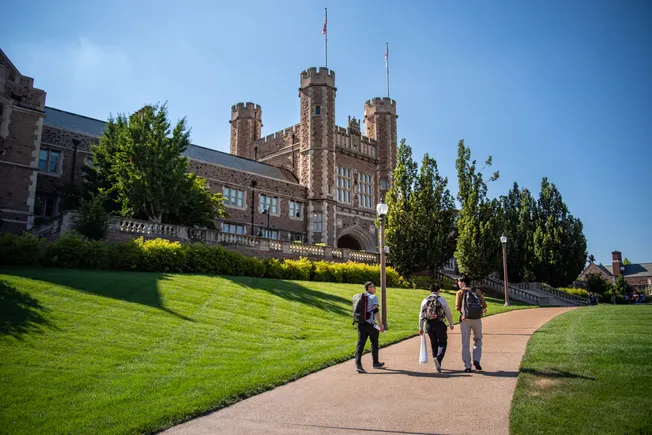
The U.S. Equal Employment Opportunity Commission (EEOC) has filed a lawsuit against Washington University, alleging that a mandatory diversity, equity, and inclusion (DEI) training at its Alvin J. Siteman Cancer Center (SCC) unlawfully segregated employees by race. The complaint, filed Wednesday, centers on a training session where participants were placed into separate Zoom breakout rooms based on racial identity. The charging party, a Black senior program manager, contends that she was isolated during the session and later faced retaliation, culminating in her termination after she complained to the EEOC.
The lawsuit, EEOC v. The Washington University, was filed in the U.S. District Court for the Eastern District of Missouri against the St. Louis-based institution. It alleges violations of Title VII of the Civil Rights Act of 1964 and Title I of the Civil Rights Act of 1991. This case is part of a broader pattern under the Trump administration, where the EEOC has actively pursued Title VII claims related to DEI programming.
Facts of the Case
According to the complaint, in June 2024, after the charging party had been promoted to senior program manager, a supervisor emailed her and other SCC administrative team members about mandatory training facilitated by the medical school's Office of Diversity, Equity, and Inclusion (ODEI). The sessions were titled “How Racism Harms” and “Anti-Racism Community Discussions.”
Shortly before the initial training, ODEI informed the team that participants would “spend time in shared racial identity spaces” and asked each member to self-identify as either White or BIPOC (Black, Indigenous, People of Color). The charging party, who is Black, selected “BIPOC” but emailed ODEI expressing concern about how the “shared racial identity spaces” would function if she were the only BIPOC person on her team. She later understood that the training would proceed without such activities, but when the training was rescheduled and moved to Zoom months later, breakout rooms were indeed separated by race.
The complaint includes an excerpt from an email in which the charging party described the experience: “Being the only Black person in the training, I was isolated and put in a position that felt profoundly alienating and cruel. It wasn't just uncomfortable — it was dehumanizing. In 2025, in this political and social climate, the only Black/BIPOC person was literally and figuratively segregated and asked to leave the 'room.' It's egregious.” She also reminded ODEI that she had flagged this issue months earlier and that a different decision had been agreed upon.
After the charging party escalated her complaints internally, the university's investigative body closed the case in June 2025 without a formal resolution, according to the complaint. She then filed a charge with the EEOC, which notified the university in July 2025. She also informed her supervisors, after which she said she “began to sense a change” in their behavior, and her work duties were gradually shifted to a co-worker.
In October 2025, a supervisor addressed a message from the university chancellor about financial difficulties and possible layoffs. The supervisor assured SCC staff that the cancer center had stable funding and that “no staffing changes, reductions or adjustments are even being considered.” However, when the charging party returned from medical leave in late October 2025, her supervisors allegedly decided to terminate her. In November 2025, they told her that there was not enough work for her and that her position would be eliminated effective Dec. 1, 2025.
The court documents note that prior to the EEOC complaint, the charging party had received “consistent positive feedback,” had “successfully completed” a leadership program, and had been given additional responsibilities through a clinical trials initiative. HR Dive reached out to Washington University for comment but did not receive a response by the time of publication.
A Changing Legal Landscape
The EEOC has been vocal about cracking down on DEI practices that violate Title VII. Last year, the agency issued joint guidance with the U.S. Department of Justice outlining how DEI programs at work can be unlawful. One technical assistance document, “What To Do If You Experience Discrimination Related to DEI at Work,” explicitly addresses conduct similar to that alleged in EEOC v. The Washington University.
“Title VII also prohibits employers from limiting, segregating, or classifying employees based on race, sex, or other protected characteristics in a way that affects their status or deprives them of employment opportunities,” the EEOC stated in the document. It further clarifies that “separating employees into groups based on race, sex, or another protected characteristic when administering DEI or other trainings, or other privileges of employment, even if the separate groups receive the same programming content or amount of employer resources” is prohibited conduct.
In February 2026, the EEOC issued a warning to Fortune 500 companies regarding DEI programming, with Chair Andrea Lucas urging them to “reject identity politics.” The current legal climate has also prompted a rise in reverse discrimination lawsuits, including one that specifically challenges DEI training. In 2022, a Colorado corrections officer filed a lawsuit alleging that his employer's DEI trainings on discriminatory housing and intersectionality created a hostile work environment. In May 2026, the court ruled that the plaintiff could not “say how the content affected his job responsibilities, interactions with fellow employees, or career advancement,” and found that his complaints did not meet the “extremely high” standard for a hostile work environment claim.