
Five Years After the Pandemic: Profound Transformation and Continuous Evolution in Human Resource Management
Five years ago, the World Health Organization declared COVID-19 a global pandemic, fundamentally transforming the workplace landscape. This article reviews how the pandemic drove the normalization of remote work, catalyzed virtual I-9 verification mechanisms, and triggered a surge in religious accommodation requests, profoundly reshaping the underlying logic of human resource management.
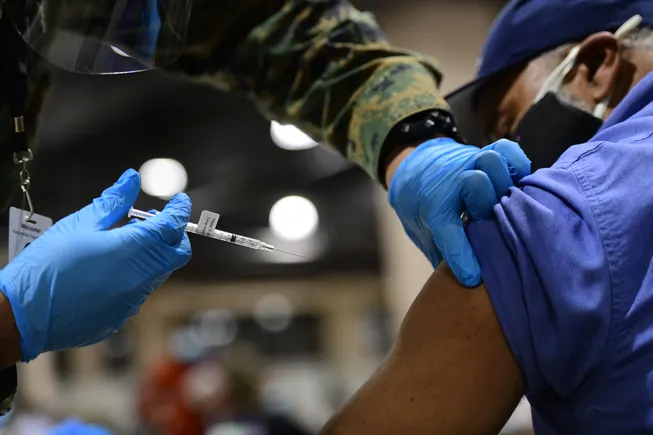
Five years. Since the World Health Organization declared the outbreak of what was then called the novel coronavirus aglobal pandemic, five years have passed.
Over those five years, state and local governments issuedstay-at-home orders, and people were told toshelter in place. Businesses across the country and around the world shut down. Early in the pandemic, movement was limited to essential workers like healthcare providers, emergency responders, and postal workers. Companies scrambled, and almost overnight, the entire workforce shifted to remote work. Schools closed, and parents juggled working from home with childcare. As businesses downsized or closed their doors,unemployment skyrocketed. The world of work as we knew it was changed forever.
Although the pace of change in HR today is nowhere near as intense as it was when the pandemic first hit, dealing with disruptive change has always been part of the profession. "I think that's the nature of HR," said Megan Berki, global head of people at legal platform Rocket Lawyer. "Based on the market environment and various different factors—from technology evolution to skills training to responding to new legislation—HR and organizations always have to respond to change."
Remote work takes off, flexibility soars
The Pew Research Center estimates that about40% of workershad jobs that could be done remotely, and most of them did so early in the pandemic. Zoom meetings replaced in-person meetings, sweatpants replaced suits, and commutes became a walk from the bedroom to the kitchen table. The massive shift to remote work fundamentally changed how employers manage their workers, experts told HR Dive.
"Before the pandemic, in the office, there was more face-to-face interaction, and managers could more directly observe how employees worked and give real-time feedback. It was a more fluid, more engaged relationship," Berki said. Faced with a suddenly remote workforce, employers had to redesign coaching, training, and employee engagement. "HR had to become much more proactive, consistent, and engaging," she added.
Talent acquisition in a remote world was also transformed. Companies could hire employees in areas where they had no office, opening up a larger talent pool. "We expanded into markets we might not have entered before or after the pandemic because we were an office-based organization," Berki said. "We had offices in specific locations, and going remote opened up other markets for us. I think that really benefited our workforce."
Remote and flexible work opened doors forunderrepresented employee groups. A recent report from Flexa found that record numbers of Black and disabled U.S. workers sought flexible work arrangements last year.
As moreemployers announce return-to-office policies, experts say a return to the pre-pandemic workplace is unlikely. "I don't think anyone has found the perfect solution. I think there are a lot of people trying different things to see what works," Berki said. "There's going to be some level of flexibility in the future."
Jessica Hardeman, head of global DEIB+ and talent attraction at Indeed, said the benefits of remote work are clear, from increased productivity and a more diverse workforce to better work-life balance. "We're in an era where we have to focus on flexibility because we've seen the need and desire for it," Hardeman said. "The future is about continuing to intentionally and thoughtfully preserve the flexibility we have, because when we choose not to be flexible, we miss out on really great talent." She noted that ensuring good culture and connection among dispersed teams remains a top priority now and in the hybrid future. "I trust they'll get the work done. I'm more focused on making sure they have a good employee experience."
Virtual I-9 review emerges
With a workforce spread across the country, the need to efficiently document those employees arose. Before the COVID-19 pandemic, the I-9 form used to verify a worker's eligibility to work in the U.S. had to be reviewed in person. But on March 20, 2020, the federal governmenttemporarily allowedcompanies operating fully remotely to review those documents virtually.
"Some of the changes we saw during the pandemic related to the I-9 process were actually landmark," said John Fay, director of product strategy at Equifax Workforce Solutions. "This was historically an in-person transaction... Obviously, when the pandemic hit, that became nearly impossible in many cases."
Aftermultiple extensionsand a loosening of the definition of remote workers, the U.S. Department of Homeland Security issued a final rule in July 2023 establishing a permanentremote I-9 verification mechanism. "That's a huge shift, and many organizations are using it," Fay said.
The documentation requirements for employers haven't changed, said Jorge Lopez, shareholder at Littler and chair of its immigration and global mobility practice. "What changed is the mechanism for meeting those requirements," Lopez said. But any change comes with growing pains. Fay noted that the virtual option allows companies to centralize the I-9 completion process, but that advantage "can also be a potential weakness." For companies with HR professionals across the country, moving I-9 verification to a centralized team can burden what is often a smaller team.
Fay said the Trump administration's plans to prioritize immigration enforcement add to that burden. Similarly, Lopez expects "a more robust enforcement environment in Trump world phase two." "When we think about immigration enforcement, some employers don't necessarily connect it to the I-9, but the I-9 is essentially an immigration form; it's about ensuring employers hire a legal workforce," Fay said. "Historically, when immigration enforcement ramps up, we typically seean increase in I-9 audits." Fay revealed that some companies are choosing to get out of the I-9 business entirely, outsourcing the process instead.
Religious accommodation requests surge
Few topics were as publicly scrutinized during the pandemic as vaccine mandates. As COVID-19 vaccines became available, pressure grew on institutions, including employers, to mandate them. Federal agencies, including the U.S. Equal Employment Opportunity Commission,generally approved policies requiring employees to provide proof of vaccination, with some exceptions, including for employees who could not be vaccinated due to sincerely held religious beliefs or practices.
One downstream effect of such mandates was increased awareness among employees of their rights to religious accommodation. HR Dive has reported on multiple lawsuits from employees who claimed they wereunlawfully fired for refusing the COVID-19 vaccineoradversely treated for requesting religious accommodation. In 2023, Seyfarth Shaw found that religious discrimination charges filed with the EEOCincreased by more than 600% year-over-yearbetween fiscal years 2021 and 2022. Seyfarth Shaw said the increase was "almost entirely attributable" to the pandemic and the resulting vaccine mandates.
Jonathan Segal, a partner at Duane Morris, said the connection between COVID-19 vaccine mandates and religious accommodation requests is real. He noted that some websites and organizations began educating people about their rights to religious accommodation, even if employees didn't have a formal religious belief or their specific beliefs didn't align with their religious organization. "There has been an undeniable increase in the number of religious accommodation requests," Segal said. "Vaccine mandates brought the concept of religious accommodation to the forefront for people who hadn't previously considered it."
The litigation that followed this trend had mixed results, with some employees' cases dismissed and others receivingfavorable jury verdictsrequiring employers to pay damages. But since the pandemic, religious accommodation has gained broader attention, partly due to alandmark 2023 U.S. Supreme Court rulingthat made it harder for employers to deny religious accommodation requests based on undue hardship.
Segal said he still sees some employers overlooking religious issues in their anti-discrimination training. That poses a risk to employers, he added, because it means both a lack of potential deterrence of misconduct and a lack of potential legal defense in litigation. "Employers can discriminate in ways they don't even realize," Segal said. "This is an opportunity for employers to review their training practices, employment policies, and complaint procedures to ensure religious issues are covered."