
Compass Coffee Responds to Union Organizing Drive with Mass Hiring
Workers at Compass Coffee launched a union organizing drive on May 31, and Workers United filed an election petition with the National Labor Relations Board on June 4. Since then, the company has been accused of mass hiring, including executives from other companies and political figures, with the union questioning whether this is intended to dilute the vote. The election is scheduled for July 16.
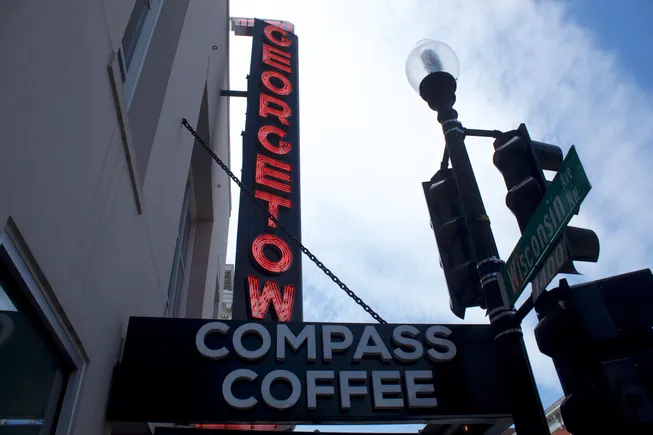
On May 31, some workers at 18 Compass Coffee locations launched a public union organizing drive. On June 4, Workers United, the union supporting the organizing drive, filed a petition with the National Labor Relations Board (NLRB) seeking elections at 7 stores across 5 bargaining units, involving 47 employees.
According to Joseph Babin, a member of the organizing committee and a Compass shift supervisor, management at the Washington, D.C.-based company began adding a significant number of employees, including executives from other companies, during the second week of June.
On June 19, Compass CEO Michael Haft told Restaurant Dive that the 7 stores had about 100 employees. However, Compass notified the NLRB and Workers United that the 7 stores had a total of 167 potential voters.
John Logan, chair of the Department of Labor and Employment Studies at San Francisco State University's Lam Family College of Business, said, "If an employer claims that a store where everyone expects only 15 to 25 employees actually has 50 employees, that's a bit of a stretch."
Many of the workers Compass listed as potential voters appear to have been hired recently, and some are not hourly store workers. According to shift supervisors who worked with them, some have worked shifts as baristas. Both the scale of hiring and the inclusion of people who are not baristas or barista apprentices could raise issues ahead of the union election scheduled for July 16.
Tyler Hofmann, an organizer with Workers United, said the union plans to "challenge people who we don't believe have worked any shifts at these stores, as well as those who were brought in specifically to dilute the vote."
Compass's list of potential voters includes Jacob Tyner, who, according to his LinkedIn profile, is general counsel to U.S. Senator Dan Sullivan (R-Alaska). Restaurant Dive confirmed Tyner's identity by cross-referencing the Compass list and LinkedIn information with the Maryland State Bar Association and the George Mason Chapter of the Sons of the American Revolution. As of press time, neither Tyner nor Sullivan's office had responded to requests for comment.
Others on Compass's voter list include Graham McLaughlin, president of snack brand Snacklins and a former candidate for an at-large D.C. Council seat, and Cullen Gilchrist, founder and CEO of Union Kitchen, a Washington, D.C.-based food business accelerator that has recently been engaged in a protracted battle with UFCW Local 400 over union representation.
McLaughlin said he has never worked any shifts at Compass and is not a Compass employee. "I helped them with training once," he said, "so that might be why I'm on the list. But I've never worked a shift or done anything." McLaughlin said he will not vote.
In an interview with Restaurant Dive, CEO Haft said Gilchrist is a close friend and business partner. Haft is a board member of Gilchrist's Union Kitchen. As of press time, Gilchrist had not responded to a request for comment.
Haft added that in high-turnover industries like coffee shops with many small workplaces, workers don't need unions. Haft said, "I very much wish we didn't need a union to represent baristas," and that workers unhappy with the company "might be better off going somewhere else."
Tizzy Brown is also on Compass's list. She handles national partnerships and federal affairs at Uber. According to a letter Compass sent to Brown on June 19, she was not a Compass employee when the voter list was submitted to Workers United and the NLRB on June 18.
Brown said in an email to Restaurant Dive that she attended a training session hosted by Compass on June 9 because she was interested in potentially working with them part-time. Brown signed some documents at the event and was entered into Compass's system as an employee. However, according to Compass's letter to Brown, she was removed from the company's system as of June 9. Brown said, "I never worked any shifts other than that initial training. Once this came to light, I immediately contacted Compass to ensure I was removed from their employment system."
Haft declined to discuss whether specific individuals were employed by Compass Coffee, citing privacy concerns.
David Rosenfeld, a labor attorney at the law firm Weinberg, Roger and Rosenfeld, said it is uncommon in NLRB elections for people who claim not to work for a company to be listed as its employees. "If that's true, it's completely bizarre, unreal, and crazy," Rosenfeld said. "I've never heard of an employer being so stupidly egregious." Rosenfeld said that if Compass did indeed pack the bargaining unit as alleged, it would make it easy for the union to successfully challenge ballots or prompt a re-run election.
Who is eligible to vote has not yet been determined
Logan said that typically, when determining the appropriate bargaining unit for an election, the NLRB tries to determine the "community of interest" among workers. Logan said it's fairly common for large employers to try to swamp the bargaining unit with new hires or by including additional job classifications and departments from the company's existing workforce, but this tactic is uncommon among small employers like a regional coffee chain.
Parties in NLRB elections frequently challenge ballots cast by workers they believe are not part of the bargaining unit. In some cases, this depends on job duties: managers with hiring and firing authority are barred from voting. Shift supervisors with limited supervisory duties, like Babin and another pro-union shift supervisor, Penina Meier-Silverman, are not always excluded, and due to this ambiguity, they often vote in union elections.
If challenged ballots are enough to affect the outcome of the election, the NLRB regional office will hold a hearing to determine voter eligibility before counting the eligible ballots.
Haft said in an email to Restaurant Dive that the final voter list will be determined on July 14, a few days before the scheduled election, through a collaborative process between the NLRB, Workers United, and Compass, although he expects Workers United will not challenge the list. "We believe all employees of Compass Coffee at the stores where petitions were filed are eligible," Haft wrote. "The list reflects the current employees at the time of the vote."
Under the election agreement between Compass and the union, workers employed by Compass during the pay period ending July 14, and those who averaged four or more hours per week in the quarter prior to that date, are eligible to vote.
Haft said some workers on the list were transferred from other stores. Haft said many are new hires, which he attributed to seasonal employment fluctuations at stores near universities. Compass Coffee, according to Haft, "is busiest in the warmer months, which we call 'cold brew season,' so employment always rises at this time of year. As a retail business that survived COVID-19, we're grateful to finally see this trend."
However, on June 19, Haft showed Restaurant Dive records indicating that foot traffic at Compass stores in downtown Washington, D.C., including a unionized store, was more than 50% behind June 2019 on comparable dates.
Kolyo Kolev, a shift supervisor at the Georgetown store on Wisconsin Avenue and a union supporter, said his store is in "one of its slowest phases." Nevertheless, Kolev said staffing at the Georgetown store has ballooned compared to before the union organizing drive. "Today, we have six people on the floor. On a weekday, that's kind of unheard of," Kolev said on June 20. "Usually we have a maximum of four, four to three."
Haft said some workers were hired to fill gaps because Compass staffed two new stores with experienced baristas; others were being trained for future expansion. Haft said the company puts new hires through a "Coffee Academy" inspired by his experience in the U.S. Marine Corps to prepare them to become baristas.
Kolev said that before the union organizing drive, shift supervisors had been asking the company to improve staffing to no avail. "My manager always said there wasn't enough budget or there was some reason not to hire more people," Kolev said. According to Kolev, that changed in early June.
New hires brought in through group interviews, mass hiring
Briana Adams was the manager of Compass's Wisconsin Avenue store until June 17. She said recent new hires at the store were not recruited through the company's normal process, which requires a one-on-one interview with the store manager. Instead, Adams said, new hires were brought in through group interviews and hired en masse by a company executive.
"They're just sending new hires to the places that are organizing, because none of the stores that aren't trying to unionize have anyone added to the schedule," Adams said. "I think it's to dilute the union vote, so they can have more no votes than yes votes."
Adams said the Wisconsin Avenue store typically needs only nine or ten employees to operate normally. Adams said she was fired after being asked to discipline a worker who discussed the union with coworkers and customers. Adams said that instead of issuing a written warning, she asked her supervisor if she could speak with the company's attorney to ensure the discipline wouldn't violate labor law.
Penina Meier-Silverman, a shift supervisor under Adams, said the company began restricting shift supervisors' access to see who was scheduled for shifts at the Wisconsin Avenue store, and some new hires showed up without the store manager or supervisors knowing, unaware they had been scheduled or were there for training. Kolev said new hires showed up without knowing what was going on. "I definitely don't need 16 extra people on my schedule," Adams said.