
Second-Chance Hiring: A Win-Win Practice to Alleviate Labor Shortages and Break Down Employment Barriers
Facing persistent labor shortages, some U.S. manufacturers are turning to "fair chance" or "second-chance" hiring programs to recruit individuals with criminal records. These programs not only open new talent channels for companies but also provide employment pathways for formerly incarcerated individuals to reintegrate into society. Drawing on cases such as JBM Packaging and Indiana's HIRE program, this article explores their effectiveness, supporting measures, and multi-stakeholder collaboration experiences.
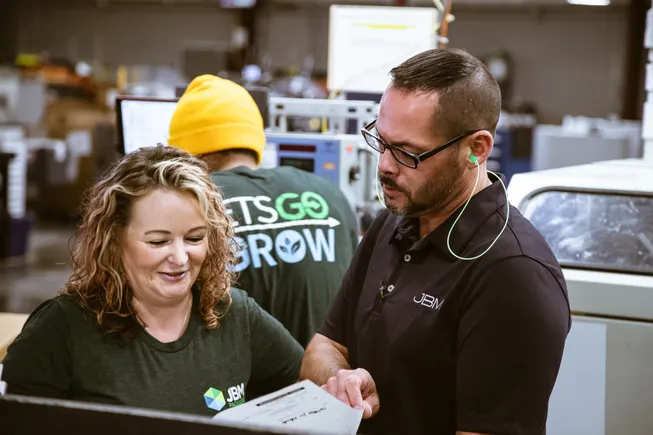
Five years ago, Amanda Hall could not have imagined herself as a Talent Acquisition and Training Specialist at JBM Packaging in Ohio—she had just ended a long involvement with the justice and correctional systems. Today, she has achieved a career turnaround through the company's employment and training program specifically designed for formerly incarcerated individuals.
"Before I was released from prison, I was very anxious, constantly thinking: 'Once I leave the prison walls, how do I continue the progress I've made in rehabilitation?'" Hall recalled. "Maybe I had a great resume, but no one would be willing to hire me. Just one month before my release, JBM Packaging came to the prison." A growing number of manufacturers are turning to "fair chance" or "second chance" programs to alleviate hiring challenges, and both companies and new employees report that such partnerships bring sustained, multifaceted benefits.
JBM partners with the Ohio Department of Rehabilitation and Correction to identify incarcerated individuals nearing release who are suitable for job openings. Its fair chance program has been running for about seven years, and currently nearly one-third of the company's 150 employees are program participants.
"If people can't earn a living, many will return to their old ways—that's what landed them in prison in the first place," said Marcus Sheanshang, President and CEO of JBM Packaging. "The correctional system also wants the program to succeed because they don't want to see recidivism." In Indiana, for example, state Department of Correction data shows the recidivism rate in 2022 was 29.79% (referring to the percentage of offenders re-incarcerated within three years of release), significantly lower than the 37.9% in 2011—the year before the state launched HIRE (Hoosier Initiative for Re-Entry). The state's Department of Workforce Development helped create the program in 2012 to help formerly incarcerated individuals reintegrate into society. Organizers say there is a correlation between the interventions and the declining recidivism rate; a 2017 study by Indiana University Bloomington also supports this conclusion.
"Since I've been involved with this program for seven years, the recidivism rate has continued to decline," said Jordan Baer, HIRE Program Coordinator, noting that data shows 85% of recidivists were unemployed at the time of their offense.
Hall experienced childhood trauma, later became involved with drugs and fell into debt, and eventually began selling drugs to support her habit, which led to incarceration. She says that obtaining and maintaining stable employment at JBM Packaging helped her get back on her feet and thrive. "I was able to focus on my work, rebuild my life, pay off all my fines and fees within about six months, and complete my probation period." Hall initially started as a frontline machine operator at JBM Packaging. Despite having no manufacturing experience, she learned quickly and performed well. A few months later, she applied for a trainer position and was promoted, eventually moving into the human resources department as a recruitment specialist while continuing to participate in the fair chance program as a supporter and recruiter.
According to Sheanshang, most participants in JBM's fair chance program start in entry-level positions and then advance to supervisory roles. The company is also willing to place formerly incarcerated individuals in any open position, including logistics and management.

Meeting Needs on Both Sides
Formerly incarcerated individuals face fundamental barriers in job seeking, such as stigma or employers' reluctance to take a chance on hiring someone with a criminal record. Additionally, they "face up to 650 different rules and restrictive factors—what we call collateral sanctions—that hinder returning citizens from finding, obtaining, and keeping jobs," said Basette Smith II, co-founder of The Empower Group, a consulting firm. Collateral consequences include laws in many states that bar returning citizens from public sector positions, such as emergency response roles.
For years, manufacturing has faced hiring difficulties due to labor shortages. A report released this month by Deloitte and The Manufacturing Institute shows that by 2033, manufacturing will need to add up to 3.8 million new workers, but if current gaps remain unresolved, 1.9 million of those jobs could go unfilled. JBM Packaging is one of many companies that have turned to re-entry programs to tap into a vast pool of untapped talent due to hiring challenges.
"The program truly supports our growth. Without the fair chance program, I can't imagine where the company would be today," Sheanshang added, noting that formerly incarcerated individuals are "highly engaged" and represent a stable source of talent for JBM. Other packaging companies promoting second-chance hiring include CKS Packaging, Vericool Packaging, and Nehemiah Manufacturing. The latter two companies have missions specifically focused on providing manufacturing, fulfillment, and warehousing jobs to formerly incarcerated individuals: Vericool specializes in bio-based cold chain packaging solutions, while Nehemiah produces products in partnership with brands like Tide and Downy.
According to The Empower Group (whose founders previously worked at Nehemiah in Ohio), one-third of Ohio's population has a criminal record or has had contact with the justice system. When the White House declared April as "Second Chance Month" (commemorated annually since 2017), it cited data showing that more than 650,000 people are released from state and federal prisons each year, and more than 70 million Americans—about 21% of the U.S. population—have a criminal record.
Sources say packaging companies have been particularly prominent in hiring formerly incarcerated individuals. Baer of the Indiana Department of Correction confirmed that the packaging industry plays a significant role statewide, with thermoforming and box manufacturing companies standing out as local second-chance employers.
Hiring returning citizens is mutually beneficial: it eases companies' labor pressures while providing opportunities to "a talent pool that has been marginalized and overlooked for too long." Smith added, "There's also altruism in this." JBM Packaging has also discovered other benefits, such as reduced employee turnover. "Fair chance program employees do have turnover, but it's lower than non-fair chance employees," Sheanshang said. "They want to be part of something bigger."

Meaning Beyond a Paycheck
Although JBM initially explored the program to fill workforce gaps, deeper human concern and program success have led the company to sustain and expand it. Elle Baker, co-founder of The Empower Group, said: "We encourage companies to invest in a permanent and sustained cultural transformation. Indeed, we see more companies becoming interested because of labor shortages. We don't object to that initial motivation." But Empower cautions against stopping at providing jobs; companies should also provide other supportive services to build a holistic program.
"A paycheck is just one piece of the puzzle. Returning citizens often lack the support we know is necessary for long-term success," Baker noted. Returning citizens significantly overlap with people in poverty, and "companies that want to succeed in this space must provide on-site support." The types of support "vary by company" and may include financial education, mental health counseling, addiction recovery groups, and transportation assistance. She advises companies to first conduct a needs assessment to identify what support would be valuable to both employers and employees.
Holistic programs "help people discover their own hidden resilience" and "help them dream bigger than they ever have before," Smith said. Hall wholeheartedly agrees, saying that participating in JBM's fair chance program not only improved her job skills but also boosted her confidence, positively impacting both her work and home life. "Everything is like the life I once dreamed of," she said emotionally, noting that her transformation has brought personal growth, healthy relationships, and a three-year-old daughter.
"It takes intentionality, it takes investment, it takes commitment."

Basette Smith II
Co-founder, The Empower Group
JBM provides a wide range of services to fair chance participants, including assistance with purchasing vehicles. A foundational element of the program is that participants regularly meet with life coaches. Returning citizens can receive both hard and soft skills support, such as conflict resolution and coping, communication, teamwork, goal setting, setting boundaries, and building healthy relationships. Participants who complete the six-month "Better Life" coaching program attend a graduation ceremony.
"It's a very moving event because many people coming out of prison haven't had parents, partners, or children feel proud of them in a long time," Hall said. "At this ceremony, they can stand up and be recognized, and their families are truly proud of them." Baer of the Indiana Department of Correction said that beyond job placement, reintegration services also help reduce recidivism. Even helping with driver's license applications, renting or buying a home can facilitate re-entry. Ongoing follow-up from counselors or support staff is equally critical.
"The hardest part is keeping the job, maintaining the momentum that's been built, and not being dragged down by negative influences from others," Baer said. "We don't drop people off at a job and walk away. As HIRE Program Coordinator, we continue to follow up... helping them pursue better jobs or educational opportunities, or continue clearing other obstacles." Baker noted that these broad programs aim for equity—providing help based on individual needs—rather than equality—giving everyone the same resources. When companies "are serious about lasting change and cultural transformation, these supports should be built into the system."
Baker said companies are often initially cautious about hiring people with criminal records and even more daunted by the idea of providing social service supports. But such programs actually benefit the entire workforce and company culture. She has noticed that more companies are moving from "identifying, labeling, or segregating certain employees" toward initiatives that cover everyone. Smith said the positive impact also ripples out to the broader community. "Companies are also community citizens, especially in packaging and manufacturing. Being a good community citizen means not only providing jobs but also partnering with the community to provide holistic support. It takes intentionality, it takes investment, it takes commitment."

Strong Partnerships
For first-time attempts, developing a second-chance program can be challenging, especially "bringing human services elements into a for-profit corporate environment," Smith said. But partnering with experienced external organizations can help solve problems and reveal best practices. "This is something we strongly advocate—companies don't have to go it alone," said Baker of Empower. Smith added: "This is exactly what we do: help companies become fair chance employers that change lives. If you're unsure, don't hesitate to reach out to us for help."
Companies can also partner with correctional departments or other state agencies. Sheanshang said Ohio played a critical role in the launch and ongoing operation of JBM's fair chance program. Additionally, there are numerous incentives at the federal and state levels, typically in the form of tax credits, to encourage employers to hire formerly incarcerated individuals, including in Illinois, Indiana, and Maryland. Some states, such as Ohio, also promote vocational skills training programs for incarcerated individuals to improve their employment prospects after release. JBM Packaging has even installed actual equipment inside the prison for training: "People who complete training in prison can earn higher wages upon release and go further in the training program," Sheanshang said.
Indiana's HIRE program provides additional courses and training for incarcerated individuals, such as resume writing, communicating with employers, or virtual job fairs. "This way they're prepared for the market before they leave. After release, we continue to provide support," Baer said. He mentioned that the HIRE program works extensively with employers, including allowing participating companies to interview incarcerated individuals before their release. Participation is free for both returning citizens and hiring companies.
Indiana's HIRE re-entry program is considered an industry benchmark and has been recognized by organizations such as the National Association of State Workforce Agencies. Baer said that in addition to companies consulting the Department of Correction, other state agencies have also reached out to learn about the program and seek best practice advice. JBM is also happy to share its experience. Sheanshang offers one key piece of advice for anyone starting a re-entry program, applicable to many life situations: "Be careful about judging others; don't jump to conclusions."