
U.S. warehousing employment continues to decline, with more layoffs imminent in 2024
U.S. warehousing employment continues to decline, with more layoffs imminent in 2024. December warehousing employment fell to 1.85 million, the lowest since November 2021. Several companies have announced facility closures and layoffs, affecting over 2,800 employees.
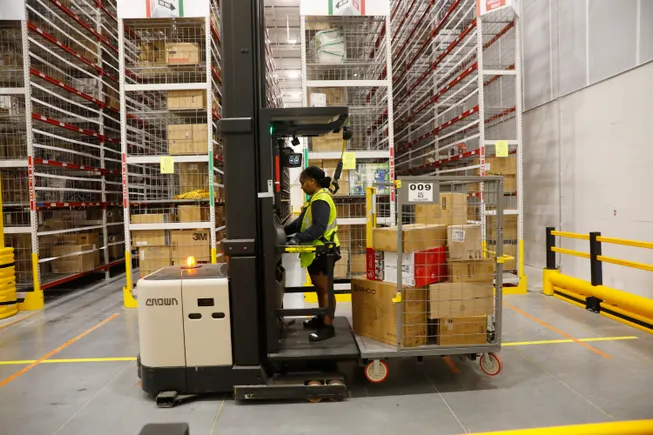
The hiring boom in the U.S. warehousing industry continues to cool, with companies shifting their focus from expansion to improving efficiency within their supply chain networks.
According to preliminary data from the Bureau of Labor Statistics, employment in the warehousing and storage industry fell to 1.85 million in December, the lowest level since November 2021.
Warehousing industry employment continues to shrink
In 2024, the industry will face more layoffs. Several retail brands, e-commerce companies, and third-party logistics providers have disclosed facility closures and layoff plans starting this year, affecting more than 2,800 employees related to warehousing and distribution operations.
2024 facility closures and layoff plans
| Employer | Facility location | Number of affected employees | Layoff start date |
|---|---|---|---|
| Saks | Wilkes-Barre, Pennsylvania | 90 | January 6 |
| GXO | Groveport, Ohio | 192 | January 15 |
| Zulily | Lockbourne, Ohio | 274 | February 7 |
| Radial | Louisville, Kentucky | 137 | February 29 |
| DHL eCommerce | Elkridge, Maryland | 120 | March 1 |
| Ahold eCommerce Sales Company | Jersey City, New Jersey | 454 | March 1 |
| GXO | Memphis, Tennessee | 211 | March 6 |
| Newell Brands | Pataskala, Ohio | 190 | March 8 |
| Schenker, Inc. | Carlisle, Pennsylvania | 478 | March 10 |
| GXO | Fairburn, Georgia | 69 | March 10 |
| Gamestop Fulfillment Center | York, Pennsylvania | 155 | March 15 |
| Fruit of the Loom | Summerville, South Carolina | 119 | March 22 |
| DHL Supply Chain | Joliet, Illinois | 161 | March 31 |
| Fanatics | Jacksonville, Florida | 218 | April 1 |
During the years of supply chain turmoil triggered by the COVID-19 pandemic, companies were busy coping with strong demand, and operating costs and efficiency were not subjected to the same scrutiny. Now, they have re-examined this strategy. Companies are more closely reviewing their operations, assessing ways to improve efficiency while cutting costs, which has led to layoffs and network layout adjustments.
Randal Kenworthy, senior partner in West Monroe's consumer and industrial products practice, illustrated this trend with his client, a mid-sized consumer goods company.
"They said, 'Now is the time for us to reassess from a supply chain perspective,'" Kenworthy said. "They are fully consolidating manufacturing operations, consolidating third-party logistics, and using the current moment to restructure their network."
Operations concentrated in new facilities
Network consolidation may mean moving operations from older, outdated facilities to more modern locations to achieve more efficient handling and transportation processes.
Sports apparel retailer Fanatics will lay off 218 workers at its distribution center in Jacksonville, Florida, as it moves operations to a new building equipped with newer technology and infrastructure, a spokesperson told Supply Chain Dive.
"Looking at our current real estate portfolio, the Commonwealth facility in Jacksonville, Florida, is one of the oldest buildings we operate," the spokesperson said in an email. "This has led to ongoing challenges as we strive to update to meet fan needs and new requirements."
Saks has also taken similar measures, laying off workers at a distribution center in Pennsylvania while moving operations to more advanced fulfillment facilities. Newell Brands, meanwhile, closed its distribution facility in Ohio that served its home fragrance division to support its supply chain consolidation and optimization efforts, according to a spokesperson.
Other companies' consolidation efforts involve handling and transporting goods from non-traditional locations.
Ahold eCommerce Sales Company will lay off 454 workers in March at a facility in New Jersey that provides fulfillment and distribution services for the supermarket chain Stop & Shop. A company spokespersontold New Jersey 101.5 in Novemberthat Stop & Shop has decided to fulfill online orders through its stores and third-party distribution partners.
Choosingstore fulfillmentoropening micro-fulfillment centers, rather than relying on more large warehouses, has become a popular strategy for companies to reduce transportation costs and keep inventory closer to delivery destinations.
"Instead of having these large distribution centers, or fully leasing more facilities, they are reassessing their supply chains and how to get products to the end consumer," said Stephanie Rodriguez, national director of industrial services at real estate giant Colliers.

Customer changes lead to third-party logistics layoffs
Many of the layoffs in warehousing and distribution are related to third-party logistics companies. As customers shift to new providers that offer the right balance between cost and service, these jobs are likely to move to competitors.
GXO's layoff plan at a facility in Memphis, Tennessee, stems from its termination of a partnership with a local customer. Affected employees can apply for open positions and transfer to nearby GXO sites serving other customers, a company spokesperson told Supply Chain Dive via email.
Brands often seek to switch to new third-party logistics providers within months after peak season peaks, if their existing partners struggle to maintain service levels during demand surges, said Brendan Heegan, CEO and founder of fulfillment company Boxzooka.
"We are currently in the deep waters of the peak season," Heegan said.
The merger and acquisition wave of the past few years has also prompted companies to streamline their third-party logistics portfolios. If newly acquired businesses use different third-party logistics providers, they are likely to switch to the parent company's logistics providers.
"[Third-party logistics] consolidation is cost-effective and easier to manage," said Kenworthy of West Monroe.