
Building Bridges: How Agencies Help the Homeless Return to the Workforce
This article explores how nonprofit organizations and government agencies help the homeless re-enter the labor market through vocational skills training, job matching platforms, and comprehensive support services, while providing businesses with access to this talent pool.
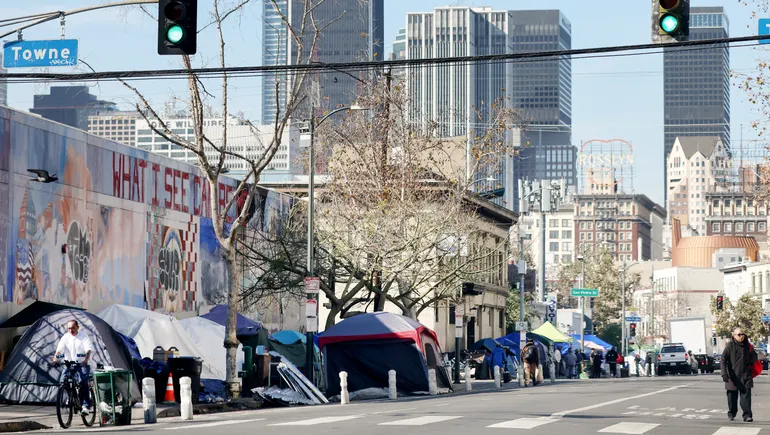
Editor's note: This story is part of a series on employers reaching out to nontraditional labor.
At Father Joe's Villages in San Diego, a steady stream of students rotates through the kitchen of Chef Helen Coyne. Coyne oversees a three-monthculinary vocational training programfor people who have experienced homelessness and want to learn skills to build a career in food service. Under her guidance, students learn the basics of food and knife safety, sanitation practices, and meal preparation, with the goal of entering the industry after graduation.
The program is housed on the Father Joe's Villages campus, where students not only learn in a classroom but also gain hands-on experience in an industrial kitchen that serves 3,000 meals a day to shelter clients.
"Clients get real hands-on experience with large-scale cooking," Coyne said.
For some, it's an attempt to step into a new field; for others, it's a return to an industry they once left, Coyne said.

"I have clients who have worked in this industry before, so they come in with some experience. Some have a lot of experience and just need a short time with me to get back into the kitchen and regain their confidence," Coyne said.
Oskar Villarberg's father was an executive chef, so he grew up around the food service industry. But his experience was limited to front-of-house work, like serving at a deli counter, rather than kitchen operations.
"It's been a great experience. I see a bright future in culinary education. It's always important because even if you don't use it as a career, you can always use it as a skill when cooking at home," Villarberg said.
Tony Ramirez learned about the culinary program while staying at Golden Hall, a temporary transitional shelter operated by Father Joe's Villages. He learned to cook from his mother as a child but never at a professional level, and he hopes the program will help him find a job in the field.
"When I went through homelessness, it was a tough experience, and it's still a bit tough now," Ramirez said. "I look forward to what the future holds. Hopefully, I can make myself more productive, find a job, and have everything I used to have again."
The culinary arts program is one of several vocational training programs offered by Father Joe's Villages and part of a growing network of resources aimed at connecting people who have experienced homelessness and are seeking work with employers.
Finding opportunities
Andre Peart, CEO and founder of Untapped Solutions, explains that for many people who have personally experienced homelessness, finding a job is more than just submitting an application; it involves coordinating mandatory appointments needed to exit the shelter system, learning or relearning soft skills like interviewing and resume writing, and attending interviews when they may not have the financial means to get there. Untapped Solutions is an AI-driven platform designed to help overlooked populations, such as formerly incarcerated individuals, people experiencing homelessness, those with mental health issues, or veterans.
Peart founded his company while living in a shelter, calling it "an Indeed for overlooked populations." He struggled to find work after spending five and a half years in prison, eventually landing jobs on garbage trucks and in maintenance roles.
"I did all the jobs I didn't want to do and never thought I would do," Peart said.
His platform helps job seekers match their schedules with jobs that can accommodate them and connects them to external resources like banking assistance, credit repair, and medical services. Peart says this makes it easier for employers to reach overlooked populations without investing a lot of effort.
"Some employers won't say it outright, but their implication is: 'I really don't want to spend a lot of effort learning how to properly hire people experiencing homelessness,'" Peart said.
Bridging barriers
The U.S. Department of Veterans Affairs (VA) launched the Homeless Veterans Community Employment Services program in 2014 to expand the employment assistance it offers to veterans and make it easier for employers to tap into this talent pool.
"Our mission is to provide housing for veterans who have experienced homelessness, but beyond that, we understand that supportive services, especially employment, are a very critical part of that process," said Dr. Carma Heitzmann, national director of VA's Homeless Veterans Community Employment Services.
Currently, the VA employs about 220 staff members nationwide focused on helping veterans find jobs. Heitzmann said they work alongside staff dedicated to helping veterans secure housing and stable living situations.
"People end up homeless for a variety of reasons. We work with veterans who may have substance use issues, mental health issues, or both. These are also factors we need to consider, ensuring these veterans have access to appropriate services to help them prepare to re-enter the workforce if they've been out of work for a while," Heitzmann said.
Through Homeless Veterans Community Employment Services, VA staff work with workforce agencies, faith-based organizations, and community groups to provide essential support such as medical care, housing, and social services to help veterans who have experienced homelessness re-enter the labor market.
"It's all about asking employers to give people a chance. Whether it's a second chance, a third chance, or a fourth chance, that's exactly what our staff do as part of their work," Heitzmann said.