
Working parents need a 'village' of support, advocates urge employers to be part of it
The National Maternal and Infant Health Summit focused on the challenges faced by working parents, with D.C. Councilmember Christina Henderson criticizing that the traditional notion of 'it takes a village to raise a child' overlooks the responsibilities of employers and institutions. The summit urged employers to expand coverage for fertility treatments and miscarriage support on top of public benefits, emphasizing that compliance is only the foundation and that employee experience needs to be enhanced.
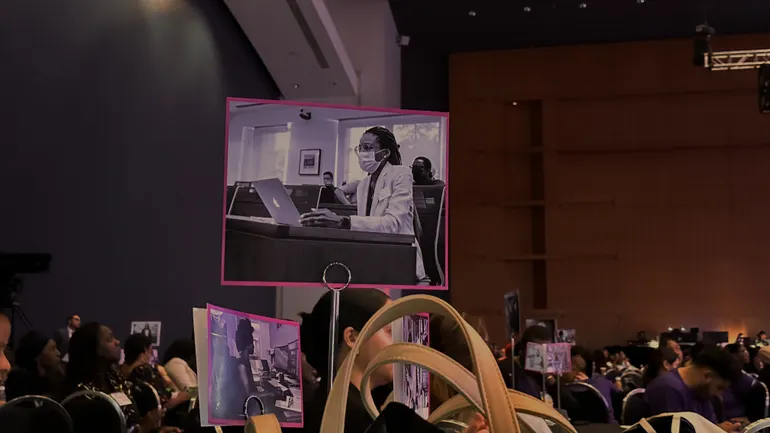
At a national maternal and infant health summit in Washington, D.C., D.C. Councilmember Christina Henderson told the audience that she has an "adversarial relationship" with the proverb "It takes a village to raise a child." Henderson's grievance lies in its imagery: traditionally, the "village" refers to godparents, friends, grandparents, and so on. But often left out are the systems and institutions responsible for creating thriving environments for working parents, including the U.S. workforce and employers.
The D.C. councilmember interwove her own experiences with the progress of workplace protections for women in the United States. She recalled being a young staffer on Capitol Hill in 2009 when Congress was fiercely debating whether the Affordable Care Act should include maternity care. Henderson recalled that former Republican Senator Jon Kyl of Arizona said at the time, "I don't need maternity care, so requiring my insurance to cover it, I don't need it, and it will make the policy more expensive." Democratic Senator Debbie Stabenow of Michigan then quipped, "I think your mom probably needed it."
"That amendment (to remove maternity care) failed 9 to 14, but I was still sitting there stunned. If we can't even agree that basic maternity care should be covered by health insurance, then we really aren't all in this 'village,'" Henderson said.
How HR can expand support based on public benefits

During the summit's "Working Women" panel, moderated by D.C. Mayor Muriel Bowser, politicians and parenting advocates called on employers to build on the work of local and national governments. In the years following Stabenow's retort, the District of Columbia began offering 12 weeks of paid parental leave. The benefit has been in effect since July 2020, and a similar federal-level benefit is now included in President Joe Biden's FY24 budget proposal.
Henderson emphasized that D.C. provides residents with prenatal and postpartum support as well as childcare subsidies. Notably, Henderson co-sponsored the legislation that became the D.C. Expanding Access to Fertility Treatment Amendment Act. The law, effective September 6, 2023, requires health insurers to cover in vitro fertilization treatments; Henderson has publicly mentioned in the past and at the summit that prospective parents spend thousands of dollars on fertility treatments.
Benefits professionals have told HR Dive that employees hide their pregnancies—and even more so their struggles. So, how can HR teams avoid conveying that "employee" and "parent" are mutually exclusive identities? Summit speaker Dr. Ayanna Bennett, the new Acting Director of the D.C. Department of Health, noted the importance of educating professionals about benefits early in their careers. For example, she mentioned that whether insurance covers egg freezing can be a mystery to some employees.
Some employers have gone a step further by connecting employees with free digital resources—guiding prospective parents through pregnancy, adoption, and other family planning paths—as part of their benefits package. Bennett emphasized that employers should not only comply with labor laws but also use them as a springboard to improve the employee experience.
HR should protect grieving parents, not just focus on joy

Moderator Ebony McMorris spoke candidly about her own health challenges. Similarly, Rep. Ilhan Omar, D-Minn., detailed her experience with miscarriage, which she wrote about in her book, "This Is What America Looks Like: A Journey from Refugee to Congresswoman." She recalled feeling isolated and alone in her grief.
"For me, miscarriage is very different from childbirth. In most cultures, when you're pregnant and you successfully deliver a child, there's a lot of celebration, a lot of conversation, a lot of excitement," Omar told the audience. She said that when prospective parents experience pregnancy complications, there are no customs, conventions, or "space" for the couple's family and friends to step in. "We carry a lot of shame. I think because from the very beginning, as women... one of the things we're told we must do is procreate," she continued. "When we fail to do that, it's as if you've done something wrong," Omar said.
Because of her Somali heritage, the pain was also intersectional; the moderator noted that American culture can be equally cruel. When Omar began processing the emotions of her miscarriage, she said, "I felt like there was no 'village' anymore."
Employers can play a role here too: one benefits professional wrote in an HR Dive commentary article that fertility benefits are a talent retention tool. Many companies have already set a precedent for supporting employees through miscarriage by establishing bereavement leave or other forms of paid time off.
Compliance is just the baseline
The U.S. Equal Employment Opportunity Commission is about to issue regulations implementing the Pregnant Workers Fairness Act, which took effect on June 27. The commission has provided examples of reasonable accommodations for pregnancy for prospective employees and employees. The EEOC also noted that the aforementioned "related medical conditions" can include miscarriage, as well as abortion, use of contraceptives, lactation, endometriosis and fertility care, menstruation, past and future pregnancies, and stillbirth.
Henderson told the audience at the summit that the "village" raising America's children should include Congress. "The village includes state capitols, city councils, and county councils. The village includes workplaces, places of worship, and places of recreation. We are all in it," she said. "Don't let (society) mislead you or us into thinking that working families should solve all their problems on their own."