
Lawyers advise: Employers should 'take a deep breath' in response to FTC's non-compete ban
The U.S. Federal Trade Commission's (FTC) proposed rule last week to ban non-compete agreements may have caught employers off guard, but several lawyers interviewed by HR Dive believe the rule will face significant hurdles before it takes effect, including legal challenges and jurisdictional disputes. Lawyers advise employers to focus more on state law compliance at this stage rather than over-worrying about the not-yet-implemented federal ban.
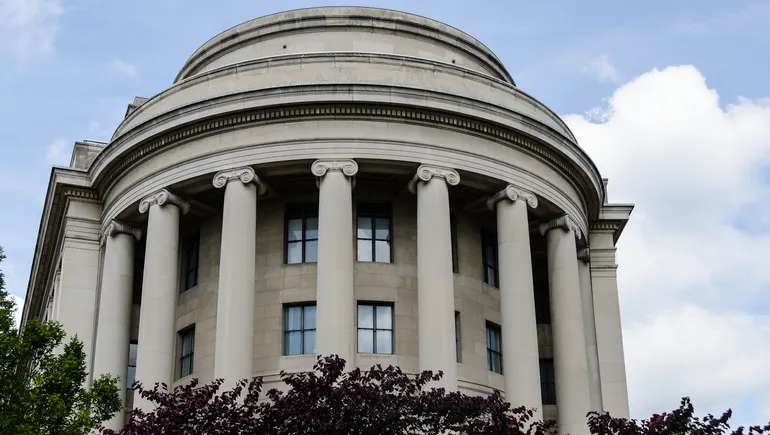
The U.S. Federal Trade Commission (FTC) announced last weeka proposed rule banning non-compete agreementswhich may have caught many employers off guard, but several attorneys interviewed by HR Dive believe the rule will face significant hurdles before it can take effect.
"This is far from a done deal — far from it," said Gregory Hare, a shareholder at Ogletree Deakins.
Interested parties have 60 days to submit public comments on the rule. Even if the FTC issues a final rule, it would still need to wait 180 days before taking effect. However, even at that point, the rule could face legal challenges on multiple fronts, particularly regarding whether the Commission has the initial authority to create such a rule.
Regulating non-compete agreements could put the agency in conflict with the U.S. Supreme Court's"major questions doctrine"Under this doctrine, general congressional delegations of authority are not sufficient for administrative agencies to address matters of major economic and political significance. The Supreme Court has previously applied this doctrine in several high-profile disputes involving federal agency regulations, such as the Occupational Safety and Health Administration's (OSHA) COVID-19 vaccineemergency temporary standardcase.
"I ultimately believe that if (the proposed rule) reaches the Supreme Court, the Court will strike it down because the FTC lacks the authority to regulate non-compete agreements," said Erik Weibust, a member of Epstein Becker Green.
Proposed rule would not change existing legal trends
Beyond questions about the Commission's authority to create the rule, there is also speculation about the extent to which non-compete agreements truly hinder talent mobility. Fisher Phillips partner Dave Walton noted that this is because state and local governments, as well as courts, have gradually shifted toward not enforcing non-compete agreements.
"Pure non-compete agreements are rarely seen nowadays," Walton said. "In my experience, judges are increasingly reluctant to enforce non-compete clauses."
Hare also mentioned a "significant trend" at the state level restricting the types of employees who can be required to sign non-compete agreements and other restrictive covenant agreements, including non-competes, confidentiality agreements, non-solicitation agreements, and similar clauses.
For example, Illinois prohibits non-compete and non-solicitation agreements with employees earningbelow certain salary thresholdsRhode Island law prohibits non-compete agreements with employeesclassified as non-exemptunder the Fair Labor Standards Act.
To that end, Weibust said he is advising clients to "take a deep breath and focus more on state law compliance," since the FTC rule may still be months away from taking effect.
Even where non-compete agreements might be permissible, employers typically must demonstrate a legitimate protected interest that necessitates such an agreement, Hare said. "For most employees, employers do not have a sufficient basis" to enforce non-compete clauses, he added. "Employers have a reason to say 'don't take our clients or information,' but rarely to say 'don't work for our competitors for a period of time,' unless the employer is a market leader in a specific field or industry vertical."
Could the FTC rule harm some workers?
Others argue that despite the obstacles facing the FTC rule, employers may still need to pay attention to how it interacts with state and local laws. "At the end of the day, if there is a federal law or regulation, then generally speaking, states must also comply, and state laws can only add requirements on top of that," said Peter Glennon, founder of the New York-based Glennon Law Firm.
Glennon has represented both employees and employers in non-compete litigation. He said the rule is overly broad and vague, failing to specify which job positions or categories of workers should be subject to the non-compete ban. Instead, the rule would impose a one-size-fits-all prohibition, even in cases where employers may have legitimate business interests, or where non-compete agreements might even benefit employees.
Glennon cited the example of an HVAC company that hires employees as apprentices and pays for them to learn necessary skills before employing them. A non-compete agreement ensures employees benefit from this arrangement while the employer does not have to worry about employees immediately leaving with those skills to a competitor.
But for other occupations, such as phlebotomists or security guards, "I cannot imagine what legitimate business interest would make a non-compete agreement valid for that particular position," Glennon said.
Hare also expressed similar concerns about the potential impact of a blanket ban on non-compete agreements on certain workers. He said that if the FTC rule takes effect, some employers may become less willing to entrust significant business resources to a single employee, fearing that the employee might leave and take the entire client base — or in extreme cases, even an entire industry segment.
"Frankly, this would inhibit information sharing, because if employers worry that their information and client relationships might leave with an employee, they would certainly be less willing to share those resources," Hare said.
Are non-compete agreements really necessary?
Regardless of the ultimate fate of the rule, now may be the time for employers to considerwhether non-compete agreements are the best choice for specific arrangementsHare said.
He suggested, for example, that employers should consider confidentiality agreements with employees who have access to sensitive information, while possibly considering non-solicitation agreements with client-facing employees. Management personnel could be required to sign non-recruitment clauses to prevent managers from taking key employees to competitors when they leave.
Another option is for employers to offer "garden leave," Glennon said. Under a garden leave arrangement, employers pay departing employees to stay at home rather than work for a competitor. However, this practice may be too costly for some smaller employers.
Meanwhile, Walton said employers "need to take a hard look" at their non-solicitation agreements to ensure they are not interpreted as non-compete agreements.
The FTC stated in its proposed rule that while other types of restrictive employment covenants would not fall within the definition of non-compete agreements, such agreements would still be treated as non-competes if they are "so unusually broad in scope that they function as non-competes in practice."
Nevertheless, some remain not overly concerned that the ban could affect employers' use of other agreements. "Employers need to remember that some form of non-compete clause is likely to survive any potential rule change, and employers certainly have other means to rely on to protect their businesses," Glennon said.