
The Grocery Industry: DEI Practices and Challenges in a Century-Old Sector
The anti-racism protests of summer 2020 catalyzed DEI progress in the grocery retail industry. Executives at companies like Kroger and Publix made public statements and launched frameworks, but employee dress code controversies exposed contradictions in practice. Beyond supplier diversity, the industry is exploring deeper changes such as employee inclusion and transparent reporting, with Walmart's ESG disclosures seen as a benchmark, while small and medium-sized enterprises still struggle due to resource constraints.
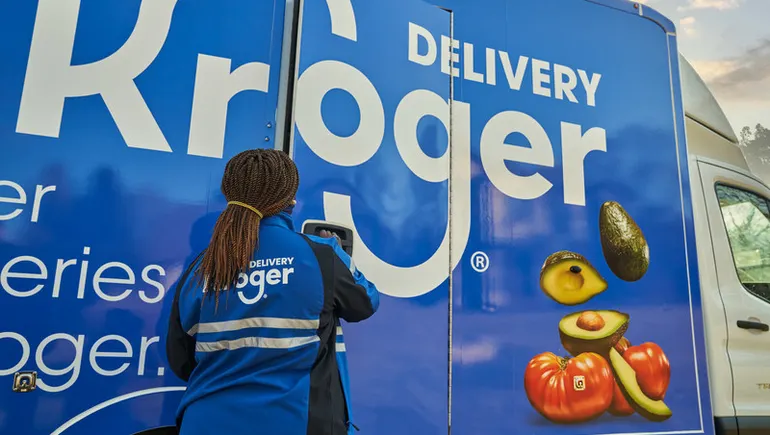
It's not as if the grocery industry didn't have diversity, equity, and inclusion (DEI) initiatives before 2020. But as with many other industries, grocery progress was accelerated by the anti-racism protests of summer 2020. While street activists called for systemic change, corporate leaders in the grocery industry were slowly pushing similar changes within their own companies.
In June 2020, Kroger CEO Rodney McMullen published an open letter linking the company's mission to "nourish the human spirit" with a desire to respond to the hurt, frustration, and anger felt by employees. McMullen also shared an allyship guide developed by Kroger's African American resource group, LGBTQ group, and Asian Pacific American group.
Ultimately, McMullen's statements translated into Kroger's DEI framework "Standing Together," whose principles include fostering "a more inclusive culture," "developing diverse talent," "advancing equitable communities," "listening deeply," and reporting progress.
Similarly, Publix CEO Todd Jones responded to the anti-racism movement and the "unprecedented challenges" of 2020. While praising frontline employees for caring for one another, Jones said: "...I am saddened and troubled by any event of racial injustice or division in our country. We are feeling many emotions - fear, anger, anxiety, and impatience." He added: "Now more than ever, we need to listen with open hearts and lead with empathy - with each other, with our customers, and with our communities. At Publix, we reject racism and discrimination in any form."

That same summer, Publix sent a young Black teenage employee home for wearing a Black Lives Matter mask; in a statement to NBC News, a spokesperson cited "the company's policy prohibiting any messaging unrelated to the chain's brand."
Whole Foods faced a lawsuit in July 2020 over a similar situation. About a year later, the National Labor Relations Board claimed Kroger violated federal labor law by prohibiting union employees from wearing BLM pins. These sharp conflicts at least show how difficult racial justice work has been to advance among grocers.
For all HR practitioners, the grocery industry may offer a case study in significant ideological reform. Unlike software industry leaders, the histories of major grocery companies date back to the 1930s (Publix), 1920s (IGA and Winn-Dixie), 1910s (Piggly Wiggly, Wegmans, and Skaggs/Safeway), and the late 1800s (Kroger).
Since 2020, DEI efforts have continued to receive attention. But looking at this ambiguous landscape, whether grocers have delivered on their 2020 promises remains to be seen.
The journey beyond supplier diversity

FMI Foundation Executive Director David Fikes noted that supplier diversity has long been on the agenda - at least 15 years before he joined FMI (the Food Industry Association). Publix mentions sourcing from "mainstream and diverse suppliers" in its social governance plan. In February 2022, Albertsons announced a diverse supplier program aimed at partnering with companies "owned and controlled/operated more than 50% by U.S. citizens" who fall into categories such as African American, Asian American, Hispanic, Native American, lesbian, gay, bisexual, and transgender, disabled veterans, or women.
Since then, Meijer has hosted an event that goes beyond traditional supplier diversity mandates, calling for "diverse-owned businesses" in areas such as HR, IT, and financial services.
But Fikes explained that aside from supplier diversity's long history in the grocery space, everything else is recent. The focus on DEI and belonging stems from these concepts "being an issue for customers."
Fikes specifically mentioned several major grocers - Kroger, Albertsons, Giant Eagle, and Publix. "They take this task very seriously and are doing a great job at it," he said. "I can look at the list of all my committee members and say 'I really respect what they're doing.' More importantly, I respect their willingness to share what they've learned with competitors. They don't see this as a competitive issue - it's a win for all of us."
Many HR practitioners are moving away from the "business case for DEI," and for good reason: the tide is slowly turning toward equity and inclusion for moral reasons, not just for profit. But the grocery industry may exemplify this, as some employees are reaping the rewards.
The gold standard in grocery: Walmart

Many grocers reaffirm their commitment to Title VII compliance of the Civil Rights Act on their DEI pages and have employee resource groups. Some grocers go further, compiling and publishing external environmental and social governance reports.
As part of its "Target Forward" plan, Target has published public reports for fiscal years 2020 and 2021. In addition to providing employee breakdowns by race and gender, and by tenure, Target continuously updates its racial justice work. It has also announced actionable talent acquisition goals, such as a 20% increase in Black team members from top to bottom from 2020 to 2023. Walmart similarly collected and published data in 2022, covering fiscal years 2021 and 2020.
The latter is noteworthy because Walmart is one of the largest - if not the largest - private employers in the U.S.
Ben Hasan, Walmart's Chief Culture, Diversity, Equity & Inclusion Officer, told HR Dive: "We believe representation matters and that talent comes from all walks of life - no matter who you love, your gender, race, physical ability, whether you're a veteran, or your religious beliefs. Talent is everywhere," Hasan added, "and it makes no sense to exclude any group because intelligence exists in all groups."
Following the anti-racism conversations of summer 2020, Walmart leadership decided "there was no point in hiding its position," and publishing ESG reports was best practice. "Transparency builds trust, and that's really our biggest capital with employees and customers," said Walmart's DEI leader.
Although this is arguably the gold standard for grocery employers, such efforts may be impractical for smaller companies.
"Honestly, for small stores, it's a funding issue. They feel pulled in many directions," said Fikes, who observed this as an FMI director. "Facing all the supply chain issues, they say: 'We're lucky to get bread on the shelves. So, we can't focus on all these things.'" Fikes also said there is "no doubt" that every member of his organization is aware of customer concerns about social issues, including fair labor practices and environmental sustainability.
While DEI may be accelerated by consumer interest, Hasan believes the giants of the grocery industry can inspire each other. "You know, business people are competitive. When they look around and find someone doing better in this area - especially in this field - it actually gets their attention. I often say this work is a journey without an end... I think transparency is one of the things that drives the work forward."