
How Second-Chance Hiring Programs Strengthen the Workforce
This article examines the dual benefits of second-chance hiring programs for individuals and businesses through the story of Persevere graduate Jabarre Jarrett. Data shows that the unemployment rate for former prisoners exceeds 27%, while hiring them can provide tax credits and enhance diversity. The article also mentions the progress of 'ban the box' laws and business coalitions, emphasizing the importance of a supportive environment.
Editor's note:This article is the first in a series about employers engaging with nontraditional labor pools.
Jabarre Jarrett worried every day after getting out of prison.
With a felony record, he didn't know how he would support the five children he and his fiancée shared. He knew finding a job would be difficult.
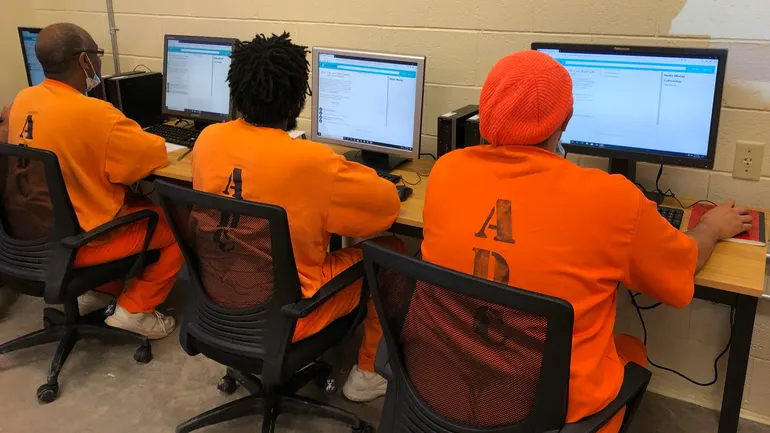
At a halfway house in Jackson, Tennessee, Jarrett learned about Persevere—a nonprofit that provides engineering and coding training to formerly incarcerated individuals, both inside and outside prison.
Every Monday, residents of the halfway house gathered around a phone to listen to recordings about job opportunities. Jarrett said Persevere provides free laptops and a $1,000 stipend to those who complete the program.
"We were responsible for writing down information that would benefit us," Jarrett said.
Two months after his release, Jarrett started the program alongside his daughter—part of Persevere's initiative to help families involved in the criminal justice system. He earned a front-end development certification in the first six months and a back-end certification in the following six, becoming a full-stack web developer.
According to data from the Prison Policy Initiative, a research and advocacy organization, the unemployment rate for formerly incarcerated individuals exceeds 27%. A February 2022 report from The RAND Corp. noted that nearly half (46%) of unemployed men in the U.S. have criminal records.
At the end of Persevere's program, Jarrett was temporarily hired to assist the organization with a grant. Eventually, Persevere decided to hire him full-time.
"I was really excited about the opportunity and made the most of it," Jarrett said. "I tried to make a good impression, and it paid off."
He initially taught web development to teenagers and now teaches life skills. He visits juvenile detention centers to talk with kids, visits state prisons to speak with inmates, and has spoken at high schools. He hopes to earn a degree in mental health.

"Being able to be the one who says, 'Look at me, I felt the same way you do, but I overcame it,' is the best feeling in the world," Jarrett said. "Knowing that I'm helping others change their lives keeps me going every day."
For employers, second-chance hiring can open up a new talent pool, improve diversity and inclusion efforts, and potentially qualify for tax credits. For those with criminal records, fair-chance employment means a fresh start.
"I love my job," Jarrett said. "Every day you get a new opportunity, and it's what you make of it."

Second chances
Across the U.S., companies are partnering with organizations like Persevere to implement hiring programs that include people with criminal records. The Second Chance Business Coalition, which includes JPMorgan Chase and Eaton, has more than 40 member companies working to promote second-chance hiring.
Additionally, according to the National Employment Law Project, a worker advocacy group, at least 37 states and 150 cities and counties have implemented "ban the box" laws. These laws prohibit employers from asking about arrest and conviction records on job applications, delaying criminal background checks until later in the hiring process.
On applications, if there's a box asking whether you've been convicted of a felony, "if you check it, they throw it in the trash," said Tony Lowden, vice president of reentry and community engagement at ViaPath, which provides tablets to prisons for online education and job training. "We don't get a personal interview."
Instead, companies need to hire formerly incarcerated individuals, mentor them, and help them stay in the workforce, Lowden said. He previously served as executive director of the White House Federal Interagency Council on Crime Prevention and Improving Reentry, which aims to reduce crime and create better outcomes for formerly incarcerated people.
"Having a felony record shouldn't sentence you and your family to a lifetime of poverty," Lowden said. "When a person comes home, if we want healthier, safer communities, we should give individuals the opportunity to get a job."
According to the Bureau of Justice Statistics, in the U.S., 62% of prisoners released from 34 states in 2012 were rearrested within three years. That number rose to 71% five years after release. An earlier study tracking 6,500 individuals released from the Indiana Department of Correction over five years found that employment status was one of the biggest predictors of recidivism—that is, reoffending.
Despite progress in fair-chance hiring, there's still work to be done, said Anthony Glover, employment coordinator at Persevere. "Ban the box" laws "just moved the box from the front of the application to the back," he said. Employers can still require a criminal background check after making a conditional job offer.
Persevere provides wraparound services for participants in job training, such as case management, transitional housing, and mental health counseling, and continues support for a year after they complete the program, Glover said.
"Like any other employee, if your life is a mess, how productive can you really be?" Glover said. "We work to ensure graduates get the support they need so they have someone to turn to when they need it."
Companies that want to create a culture where formerly incarcerated individuals can succeed offer apprenticeships, internships, and mentoring, Glover said. They engage leadership, partner with corrections departments, and provide training and support, he said.
"We're seeing companies that are actively working to build a more diverse workforce," Glover said.