
Beyond FMLA: Can Federal Paid Leave Legislation Finally Land?
Federal paid family and medical leave proposals have repeatedly stalled in Congress. The Bipartisan Policy Center has established a new working group, co-chaired by bipartisan House members, aiming to introduce legislation within one to two years. However, experts are pessimistic about passing comprehensive legislation in the short term, with disagreements centering on funding mechanisms and administrative models. Meanwhile, 13 states and the District of Columbia have enacted their own laws, leaving employers facing an increasingly complex compliance puzzle. Modernizing FMLA itself, such as recognizing telehealth certifications and expanding bereavement leave, may become a more realistic breakthrough.
Like many issues in the policy arena, federal paid family and medical leave has been repeatedly proposed in Washington, D.C., only to falter time and again. The most recent attempt was when Congress included a provision in the Build Back Better Actfor paid leave, which passed the U.S. House of Representatives in November 2021.
However, after congressional Democrats failed to reach a compromise with West Virginia Democratic Senator Joe Manchin, the provision was removed, only to beadded backin a scaled-back form. The Build Back Better Act ultimately did not pass Congress on its own, and parts of it were later folded into theInflation Reduction Act, signed into law in August 2022, but paid family or medical leave was not included.
Why has the federal government struggled to commit to paid family and medical leave? Is this policy even possible? HR Dive spoke with several experts to find out.
Bipartisan efforts surface
According toa CNN report, paid family leave provisions have been cut or removed from legislation five times since March 2020. These efforts have typically been introduced or supported along partisan lines.
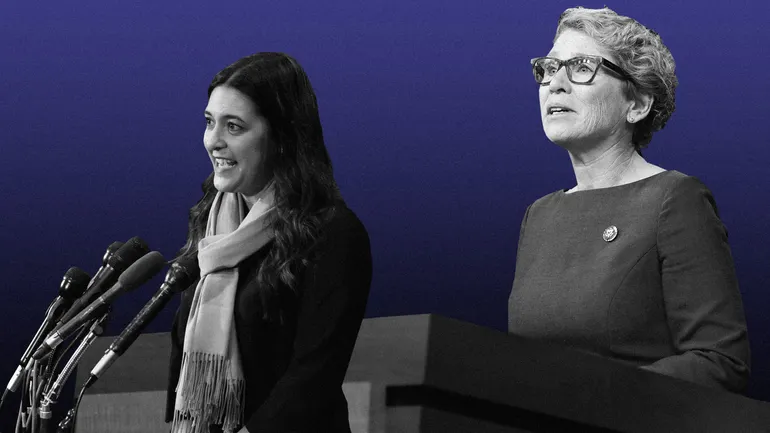
But recently, the Washington-based Bipartisan Policy Center formed a paid leave working group. The think tank is dedicated to fostering cross-party policy solutions. The group, led by Oklahoma Republican Rep. Stephanie Bice and Pennsylvania Democratic Rep. Chrissy Houlahan, aims to review a range of policy proposals and existing laws—including the Family and Medical Leave Act (FMLA)—to build a framework for bipartisan legislation to be submitted to Congress. Ben Gitis, deputy director of the center's economic policy program, said the group plans to introduce a bill within the next one to two years.
In addition to Bice and Houlahan, the working group has four other members: Texas Democratic Rep. Colin Allred, Louisiana Republican Rep. Julia Letlow, Iowa Republican Rep. Mariannette Miller-Meeks, and Michigan Democratic Rep. Haley Stevens.
Gitis told HR Dive there is reason to believe this effort could yield results. "The members of Congress involved are very enthusiastic about this," he said. "They're excited about moving things forward. I think they're willing to put in the hard work to make those tough choices when designing the program."
The Bipartisan Policy Center's working group has committed to introducing legislation through regular order, rather than budget reconciliation—addressing one of theconcerns。
expressed by Senator Manchin about the original version of the paid leave provision in the Build Back Better proposal. Within Congress, Louisiana Republican Senator Bill Cassidy has also been a strong advocate for paid family leave on the right, bringing more bipartisan attention to an issue traditionally seen as liberal. In 2019, Cassidy worked with Arizona Democratic Senator Kyrsten Sinema to advance a federalpaid family leave planthat would allow parents to choose to draw on their future Child Tax Credit benefits.
Gitis noted that the current cultural context may also provide some momentum for advancing the issue. "We just went through a major pandemic, and many people are rethinking what matters most," he said. "I think lawmakers are paying attention to that."
Declining birth ratesare another factor that couldmotivate politicians, with some concerned about the potential impact on the economy and existing benefit programs. Gitis pointed out that balancing raising children with increasing personal income and savings is very difficult, making policies like paid family leave especially important for supporting both efforts.
Reasons for skepticism
Despite the potential enthusiasm for solutions in Washington and nationwide, details remain an obstacle—as has always been the case in policy advancement. FMLA expert Jeff Nowak, a shareholder at Littler Mendelson, and Terri Rhodes, CEO of the Disability Management Employer Coalition, both said they lack confidence that the federal government will pass comprehensive leave legislation in the near term.
"When Democrats controlled both chambers of Congress, there was a golden opportunity to pass some form of paid leave legislation," Nowak said. "But for some reason, it didn't happen. That was the best time for that policy to take shape."

Rhodes mentioned that she felt most optimistic about the prospect at a DMEC meeting before the pandemic, when various interest groups and politicians expressed enthusiasm for the policy. But she said two issues had already solidified the impasse among groups back then, and these issues still seem to persist today: "They can't agree on how to administer it, and they can't agree on how to fund it."
Gitis explained that Democrats tend to favor the "traditional social insurance model." For example, theFAMILY Actproposed by New York Democratic Senator Kirsten Gillibrand and Connecticut Democratic Rep. Rosa DeLauro would authorize the government to collect a payroll tax paid jointly by employers and employees—a model used by states like California and New York.
Gitis said Republican proposals (of which there have been various versions) tend to help workers pay for their own leave. Common suggestions include tax credits, tax-advantaged savings accounts, and allowing workers to choose 1.5 times compensatory time off instead of 1.5 times overtime pay. Florida Republican Senator Marco Rubio and Utah Republican Senator Mitt Romneyintroduced a billin 2021 that would allow workers to draw on their future Social Security funds.
Advocacy groups and think tanks are sharply divided over the opposing ideological paths. Kathleen Romig, director of Social Security and disability policy at the Center on Budget and Policy Priorities, called the conservative Cassidy-Sinema plan "not paid leave,but a loanthat families must repay"; while Americans for Tax Reform said the Gillibrand-DeLauro proposal would "add another left-wing tax increaseon low-income Americans."
In the business community, Gitis said, there are often two "markedly different" groups: large multinational employers typically support federal paid family leave (and often offer it as a private benefit), while smaller employers tend to resist more. Currently, only about 44% of U.S. workers are covered by FMLA, which does not apply to establishments with fewer than 50 employees. "If you have only five employees, one employee taking 12 weeks of leave is a large portion of your workforce," Gitis noted.
Beyond funding issues, politicians also face many questions about the scope of a paid family leave policy. Should it be limited to parental leave, or also include medical leave as FMLA does? How long should the law allow? How inclusive should the law be of different family and medical situations?
These thorny questions are enough for federal politicians to defer to the states—and states are rapidly filling the gap. "When it comes to paid leave, state and local governments have been and will continue to be the leaders," Nowak said.
A complex patchwork remains
Thirteen statesand Washington, D.C., have enacted paid family and medical leave laws. Momentum is spreading—eight states' laws are already in effect, and the remaining five are about to be implemented. Nowak said he expects more states to join each year.
Rhodes said employers in certain areas are dealing with an exceptionally complex paid leave landscape. Taking California as an example, she noted that the state has a state disability insurance law and a paid sick leave law in addition to paid family leave. An employee in San Francisco has rights that workers outside San Francisco may not have; if that employee is pregnant, they are also entitled to pregnancy disability leave.
Rhodes said employers operating in multiple states need to figure out how to integrate all local and state laws for what could be a large number of employees—while also informing employees of their entitlements and how they will be paid.
Although federal law could eliminate some of that complexity—and depending on its scope, could even preempt certain state or local laws—employers would still need to understand the details of each law. Rhodes said these laws may apply to different family members, may include different pay standards, and may have different eligibility hour requirements.
Although outsourcing services are available and some software has been developed to help employers understand compliance requirements, a high percentage of respondents in a DMEC survey said they still manage family and medical leave requirements themselves. "The best approach would be to tear it all down and just create a federal paid program," Rhodes said. "But I don't think that's going to happen."
How FMLA might evolve
Given the skepticism about a federal paid leave program, might politicians revise FMLA to address other elements of the law? Nowak and Rhodes said certain provisions do need updating.
"During the pandemic, no one could go see a doctor," Rhodes said. "So they had to allow telehealth and set some parameters for it." Although the government has remained silent on post-pandemic protocols so far, "I think this will stick," she speculated.
Rhodes also said some provisions may need to be reworked to align with modern views of family life. FMLA focuses on the biological nuclear family structure of spouses, parents, and children, and does not account for different caregiving arrangements that might involve, for example, uncles or aunts. In 2015, the U.S. Department of Labor revised its regulatory definition of "spouse" to include same-sex marriage.
"One area where I could see bipartisan support is the concept of bereavement leave," Nowak said, noting that both employers and employees might support expanding such leave into the current law. "That seems like a low-hanging fruit in FMLA, I guess."