
Workplace Antisemitism: The Evolution and Response to a Form of Hatred
At the Society for Human Resource Management Employment Law and Compliance Conference held in Washington, D.C., Jonathan A. Segal, a partner at Duane Morris LLP, noted that contemporary antisemitism often manifests as conspiracy theories, historical denial, and so-called 'positive stereotypes.' He cited Anti-Defamation League data showing that in 2023, 85% of Americans believed at least one antisemitic statement, the highest level in decades. The conference also discussed the situation of Jewish employees in the workplace, hiring biases, and response strategies for human resources departments.
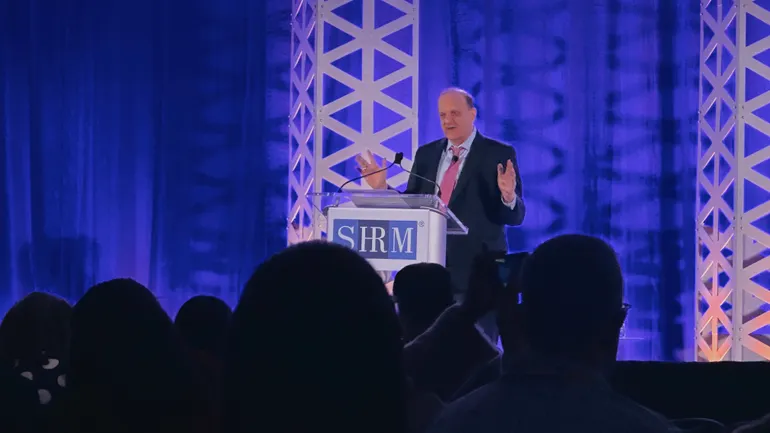
WASHINGTON — Jonathan A. Segal's Monday presentation at a Society for Human Resource Management conference was riddled with cognitive dissonance. Between stories of discrimination and disenfranchisement that have harmed his family, he guided the audience through an important discussion about the true nature of antisemitism.
Antisemitism is rooted in hate, but it is far more complex. Segal emphasized that antisemitism today often manifests as conspiracy theories and historical denial. He challenged the audience to determine whether certain statements constitute antisemitic workplace harassment, noting that antisemitism sometimes appears in the guise of so-called "positive stereotypes." He argued that the term "positive stereotype" is itself an oxymoron, much like the impact of the "model minority" myth on Asian Americans and Pacific Islanders.
Segal stressed that antisemitism is hostility, prejudice, or hatred toward Jews. "I'm talking about the Jewish people, not the Jewish religion," he said. "Most antisemitism targets individuals because of their Jewish identity, not necessarily tied to religious practice." The workplace experiences of Jewish employees and eliminating related biases are both DEI (diversity, equity, and inclusion) and compliance issues.
On workplace antisemitism —@Jonathan_HR_Lawis breaking down the psychology behind hatred directed at Jews (and sometimes even non-Jews). He explains it's a conspiracy theory.pic.twitter.com/AgcXE0yVKA
— caroline (they/them) ⭒ (@bigbosscaro) February 27, 2023
Although physical violence persists and continues to occur, Segal put rhetorical hatred in the spotlight. "What happened in Nazi Germany did not begin with concentration camps; it began with words," he said.
In recent years, such hatred has made headlines, such as the remarks of rapper Kanye West (now known as Ye). In October 2022, after Ye's derogatory tweets and Instagram statements sparked online backlash, the neo-Nazi group Goyim Defense League hung a banner on a Los Angeles highway reading, "Kanye is right about the Jews."
Segal briefly mentioned a snapshot from the Anti-Defamation League (ADL) between May 7-14, 2021, which captured more than 17,000 tweets containing "Hitler was right" or similar variations. "What scares me more than the 17,000 retweets are those who silently agree," he said.

One of the core messages of Segal's presentation was the wave of antisemitic sentiment. Data shows that this wave has risen exponentially over the past three years, directly impacting the employee experience. "We often hear about the importance of 'bringing your authentic self' and 'bringing your whole self to work,'" Segal said. But more and more Jews feel it is difficult to show up authentically in certain public spaces.
Notably, a 2019 survey by the American Jewish Committee (AJC) showed that 25% of Jews avoided certain scenarios or activities due to concerns about safety or comfort. According to the AJC's 2020 report, that figure jumped to 31%. What changed? The COVID-19 pandemic may have inadvertently provided a breeding ground for antisemitism.
The outbreak of the COVID-19 pandemic and subsequent conspiracy theories reignited antisemitic attitudes — a point Segal has noted at past SHRM conferences. As HR Dive previously documented, blaming Jews for disease and disaster has been a common tactic of conspiracy theorists.
Jonathan Segal added some nuance: antisemitism is not necessarily directed at the Jewish religion, but at the Jewish people and their heritage, and at perceptions that they are "inferior" yet "still hold great power."#shrmelcc
— caroline (they/them) ⭒ (@bigbosscaro) February 27, 2023
The ADL has documented a rising trend in antisemitism since 2014. In 2023, 85% of Americans said they believe at least one antisemitic trope, up from 61% in 2019. Similarly, 20% of Americans said they believe six or more antisemitic tropes, up from 11% in 2019.
Notably, the ADL has tracked American attitudes toward Jews and Israel since 1964; in its 2023 report, researchers highlighted that the level of antisemitism recorded was the highest in decades. The last time the ADL measured such high levels was in 1992, surpassed only by 1964 (29%).

The organization has long measured how much people believe statements such as Jews having "too much power in the business world" or being "more loyal to Israel than to America" (70% of respondents in the January report believed the latter). A key workplace insight: 53% of respondents believed Jews "go out of their way to hire other Jews."
Talent acquisition remains a battleground for antisemitism. In a 2022 survey, about a quarter of hiring managers told job site ResumeBuilder they were unlikely to hire Jewish candidates.
Embedded tweet:https://twitter.com/bigbosscaro/status/1630236820964352001
"I wear my grandmother's chai (חי) and my grandfather's ring," Segal said, explaining that חי means "life" in English. (Perhaps more widely known is the Jewish toast "L'chaim!" meaning "To life!") He told the SHRM conference audience that he usually keeps the symbol hidden under his shirt.
"But today, I will not cower because of who I am. I say this proudly — and perhaps with a hint of defiance," he added. "However, I also know that I am standing in a very safe place. If I were in certain places, you can bet I would decide to put it away."
The conference suggested that HR's role is to foster the kind of atmosphere Segal experienced at the SHRM conference: one where Jewish employees can show up as their authentic selves without having to view work as a place of self-erasure.
Solutions discussed at the conference included including Jewish talent in DEI efforts and establishing interfaith employee resource groups (ERGs). But HR professionals should remember that antisemitism is not a distant concern; it can affect their companies: Segal, referring to the 2017 "Unite the Right" rally in Charlottesville, Virginia, said, "When you saw that marcher carrying a torch, there's a word to describe him: employee."