
U.S. Supreme Court Hears Overtime Exemption Case for High-Paid Workers: Should Daily-Paid Workers Earning Over $200,000 Annually Receive Overtime Pay?
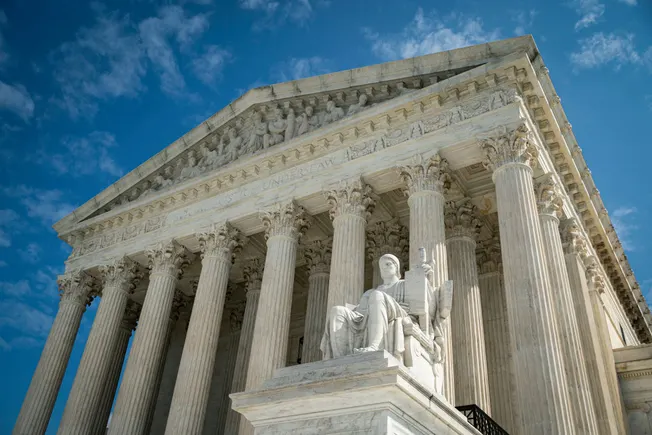
The U.S. Supreme Court heard oral arguments on October 12 in Helix Energy Solutions Group v. Hewitt, focusing on whether workers earning over $200,000 annually and paid on a daily basis qualify for the overtime exemption under the Fair Labor Standards Act. The case involves whether daily pay satisfies the salary basis test and the applicability of the highly compensated employee exemption provision in relation to relevant regulations.
Case Background: The Overtime Pay Dispute of a High-Paid Daily-Rate Worker
Michael Hewitt and his employer, oil and gas company Helix Energy Solutions Group, agree on one point: Hewitt's duties as a "tool pusher" fit the description of a "bona fide executive, administrative, or professional" under the Fair Labor Standards Act (FLSA). Both sides also acknowledge that Hewitt was well compensated for his services, earning more than $200,000 annually.
On the surface, these details alone seem unlikely to spark an employment law dispute that reaches the U.S. Supreme Court. Yet Helix and Hewitt did appear before the Supreme Court on October 12, with the nine justices dissecting a subtle wrinkle in this seemingly straightforward employment relationship.
Specifically: Is Hewitt—a worker paid a high daily rate rather than weekly—entitled to substantial overtime pay?
Overview of the Salary Requirement for FLSA Overtime Exemption
Part 541 of the FLSA regulations sets forth the conditions under which bona fide executive, administrative, or professional employees may be exempt from the Act's minimum wage and overtime requirements. To qualify for the exemption, a worker must not only perform specific duties as defined by the FLSA (the "duties test") but also be compensated on a "salary basis."
Under Part 541.600, exempt employees generally must be compensated on a salary basis at a rate not less than the specified weekly amount (currently $684 per week). Part 541.602 further defines "salary basis" as a situation where an employee receives "a predetermined amount constituting all or part of the employee's compensation, which amount is not subject to reduction because of variations in the quality or quantity of work performed." This amount must be received each pay period on a weekly or less frequent basis (i.e., weekly or more frequently).
The crux of this case lies in Part 541.601, which provides an exemption for certain highly compensated workers: defined as workers whose total annual compensation reaches $107,432. These workers must still receive at least $684 per week "on a salary or fee basis" as described in 541.602; total annual compensation may include commissions, non-discretionary bonuses, and other non-discretionary compensation; and employers are permitted to make "catch-up" payments before year-end to reach the required level.
What makes Hewitt's case unusual is that Helix paid him at a daily rate, which appears not to meet the "weekly or less frequent" requirement of 541.602. Helix disputes this. During oral arguments on October 12, Helix's attorney Paul D. Clement stated that Hewitt was guaranteed to receive $963 in any week in which he worked at least one minute, thus satisfying the weekly minimum requirement, even though the company set his rate at $963 per day.
Clement argued that the rate still satisfies the salary requirement of 541.602 because "the key to the test is: in any given week, if you work at least one minute, what is the amount you receive? For this worker, that amount is $963 or more, and that $963 is guaranteed."
"I Don't Read the Regulation That Way"
Helix's interpretation of the FLSA regulations drew opposition from the Court's three liberal justices. Justice Ketanji Brown Jackson questioned Clement's reading of 541.602, particularly whether the regulation's salary test could be summarized as "the amount a worker receives in any week in which they work at least one minute."
"Counsel, I don't read the regulation that way," Jackson said. "In fact, when 541.602 talks about what it means to be paid 'on a salary basis,' it seems to focus on the 'predictability and regularity' of payments, rather than the amount."

Jackson asked how the definition of a "salaried" employee could apply to Hewitt given that his weekly pay could vary from week to week: "In one week, because he worked one minute, he might receive the minimum amount; in another week, because he worked more than one minute, he might receive more. Given the regulation, why wouldn't we understand the salary basis that way?"
Clement responded in part that 541.602 "very specifically" distinguishes between salary and compensation. He said the "predetermined amount" in the salary basis definition of 541.602 need only constitute "all or part" of the employee's compensation. "And, with respect, the regulation does not require stability beyond that," he added.
A "Fictional" Salary?
According to Edwin Sullivan, attorney for the employee, the fact that Hewitt was paid on a daily basis may still conflict with 541.602. This is because Part 541.602 provides that an exempt employee must receive their full salary in any week in which they perform any work, "without regard to the number of days or hours worked." Sullivan said that for Helix to satisfy the salary requirement, its arrangement with Hewitt would need to comply with another branch of the FLSA regulations—Section 541.604(b).
Section 541.604(b) provides that an exempt employee's earnings may be "computed on an hourly, daily, or shift basis, without loss of exemption or violation of the salary basis requirement," provided that the employee's work schedule "also includes a guarantee of at least the minimum weekly required amount paid on a salary basis, regardless of the number of hours, days, or shifts worked, and that there is a reasonable relationship between the guaranteed amount and the actual earnings."
"I Think It's Fictional Only When It's Called a Salary, and It's Not a Salary."

Edwin Sullivan
Attorney for Michael Hewitt
But Sullivan said that Helix's arrangement with Hewitt failed to meet the requirements of 541.604(b)—a view that was reflected in the decision of the U.S. Court of Appeals for the Fifth Circuit, which ultimately sent the Helix case to the Supreme Court.
Sullivan noted that Helix admitted it could not satisfy the requirements of 541.604(b)—and argued that it did not need to satisfy 541.604(b) at all—"which is telling, because 541.604(b) is designed to avoid fictional salaries." This remark prompted a question from Justice Clarence Thomas, who asked Sullivan whether he believed Hewitt's compensation was fictional.
"I think it's fictional only when it's called a salary, and it's not a salary," Sullivan said.
Further questioning of Sullivan by Justice Brett Kavanaugh focused on the $963 that Helix would pay biweekly if Hewitt worked one minute in a given workweek. Since Helix guaranteed Hewitt that $963 payment, Kavanaugh asked, why doesn't that clearly answer whether Hewitt was paid a salary?
In part prompted by Jackson, Sullivan responded in part that the $963 was a daily rate—not a weekly salary—and therefore did not satisfy the requirement in 541.602 that the "predetermined amount" be received on a weekly or less frequent basis. Because Hewitt could earn more than $963 in a week by working more than one day, Sullivan argued that this also undermined Helix's position that the $963 was a "predetermined amount" within the meaning of 541.602.
"It has to be a predetermined amount on a weekly or less frequent basis," he said. "And that's not the case here. At best, if it's $963, it's a predetermined daily amount."
The "Central Question" of the Case
The Helix case involves a circuit split: whether the highly compensated employee exemption under 541.601 is subject to the requirements of 541.604(b). The Fifth Circuit answered in the affirmative, while the First and Second Circuits disagreed, holding that 541.601 is not subject to the requirements of 541.604(b).
Clement, representing Helix, argued that 541.601 is not subject to 541.604(b) because 541.601 "does not independently address the salary basis issue" but instead references the salary basis definition in 541.602. "But 541.601 does address the issue of 'minimum guarantee plus additional compensation,'" Clement said, which repeats part of 541.604(b) while conflicting with other provisions.
This touches on the "central question" in the Helix case, said Paul DeCamp, a member of the law firm Epstein Becker Green, in an interview with HR Dive. "Helix's argument is that you don't need to satisfy 541.604(b) because a daily rate can function as a salary under the general definition in 541.602."
Hewitt's high compensation was a focal point during the October 12 oral arguments, particularly among the Court's conservative members. Thomas noted that Hewitt's annual income of approximately $200,000 made it difficult to view him as a "day worker," a point underscored in the FLSA regulations; 541.601 states that high compensation "is a strong indicator of an employee's exempt status, thereby eliminating the need for a detailed analysis of the employee's job duties."
Potential Outcomes in the Helix Case
DeCamp said that given the composition of the Court, he expects employer Helix to prevail in this case, but the final vote distribution among the justices remains unclear. Additionally, because the case involves a narrow section of the FLSA regulations targeting a specific group of employees, "it may not have a huge impact on many employers nationwide," DeCamp said.
Nevertheless, there remains a possibility that the justices—whether as part of the majority opinion, or in concurrences or dissents—may take a broader view of the FLSA regulations and the administrative issues involved in the Act itself.
"It is noteworthy that the Supreme Court decided to hear this case at all," Joshua Zuckerberg, a partner at Pryor Cashman LLP, said in an email to HR Dive. "Given this Court's willingness to subject administrative actions and regulations to critical scrutiny, and its general tendency to limit the regulatory state, this Court is likely to view the Department of Labor's salary basis test negatively and may rule that these regulations are inconsistent with the FLSA, and/or invalid."
This possibility was raised primarily by Kavanaugh during oral arguments.
"It seems easy to argue: 'Let's start with the fact that the regulations are inconsistent with the statute, and therefore the regulations are entirely invalid insofar as they concern salary,'" he said. "I'm just saying, if that issue isn't here, if the statutory argument isn't here, I'm sure someone will raise it, because it's powerful."
If the justices decide to weigh in on that aspect of the case, "that's where things get interesting," DeCamp said. He noted that the Court has shown a willingness to address administrative rulemaking issues in recent cases such as West Virginia v. EPA, where the Court held that Congress had not authorized the EPA to set certain emissions caps.
"If I were betting, I would expect the analysis in this case to focus almost entirely on the regulations and which interpretation of the regulations is more correct," DeCamp said. But he said a deeper exploration of the FLSA could help show—among other things—how the Court's approach to interpreting and deferring to agency rulemaking may be shifting.