
Under the pandemic, healthcare workers face an increased risk of workplace violence
During the pandemic, workplace violence against healthcare workers has become increasingly severe, ranging from verbal abuse to physical assault and even frequent homicide incidents. This article explores the current situation, causes, and countermeasures of violent incidents.
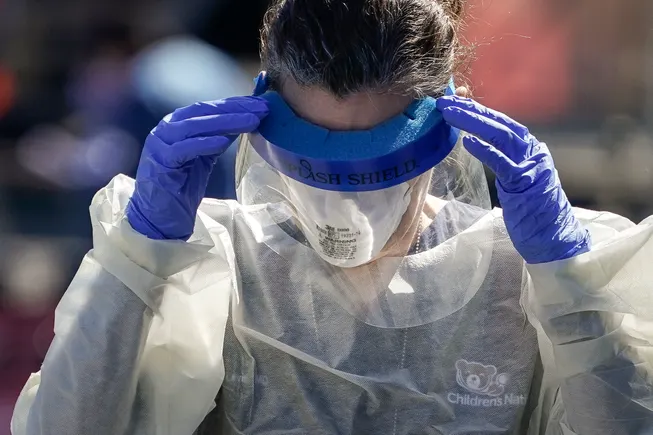
For registered nurse Kimberly Mullen at Kaiser Permanente South Bay Medical Center in Los Angeles, being kicked, scratched, shoved, or threatened while on duty in the telemetry unit is not uncommon. She says it is seen as part of the job when dealing with patients who are sometimes confused, frustrated, and feeling out of control in an unfamiliar hospital environment. Still, she is grateful she has not experienced worse, such as when a colleague of hers was attacked by a patient's family member.
Mullen and millions of healthcare workers across the country are gradually becoming accustomed to workplace violence, ranging from verbal abuse and threats to physical violence and even homicide. The extent to which the pandemic has exacerbated this issue is not entirely clear, but multiple attacks have occurred this year.
Registered nurse Hannah Drummond at HCA Mission Hospital in Asheville, North Carolina, says yelling, insults, and loud noise are now a daily occurrence, "which was not the case in the past."
According to data from the U.S. Bureau of Labor Statistics, workers in healthcare and social services industries have the highest rates of injuries caused by workplace violence, being five times more likely to be injured than all workers combined. These incidents have risen almost every year since the Bureau began tracking them in 2011. Sometimes these incidents are fatal. According to Bureau data, between 2016 and 2020, private healthcare workers experienced an average of 44 workplace homicides per year.
Currently, there are no federal requirements for healthcare employers to protect employees from workplace violence, although the Occupational Safety and Health Administration provides voluntary guidance. A few states have regulations for employers or legal penalties for perpetrators, leaving most of the responsibility on individual hospitals.
Some nurses say their hospitals effectively protected them during the pandemic, such as through ongoing visitor restrictions and workplace violence prevention programs often pushed by unions or mandated by state laws. Others disagree, arguing that a lack of security, training, and pandemic-worsened staffing issues prevented them from providing timely, adequate care to every patient, leading to frustrations among patients and families that sometimes escalated into violence.
"Fewer and fewer resources to care for patients"
Meanwhile, hospitals are facing unprecedented staffing shortages. As widespread stress and burnout prompt healthcare workers—especially nurses—to consider leaving, this situation is unlikely to ease in the short term. According to data from the Department of Health and Human Services, in early January, one in four U.S. hospitals reporting to the agency faced severe staffing shortages.
Drummond of HCA Mission Hospital said a patient recently attacked her colleague because staff did not deliver medication in time. "Many of the frustrations nurses bear are legitimate because every year we have fewer and fewer resources to care for our patients," Drummond said.
So far this year, there have been multiple attacks on healthcare workers. For example, in late January, an ICU nurse at Ochsner Medical Center's West Bank Campus in New Orleans was attacked by a patient's family member, confirmed in a statement by the health system's CEO, Warner Thomas. Thomas is now advocating for state legislation to make violence against healthcare workers a felony, because "hospitals are responding to an increase in disruptive or violent incidents within hospitals—many involving hostile visitors—which adds further strain to the healthcare workplace."
In some states, such as Utah, lawmakers are currently considering strengthening penalties for assaulting healthcare workers. Wisconsin already has a law making battery against certain healthcare workers a felony, but a bill under consideration in its legislature would extend this penalty to anyone threatening violence against healthcare workers—similar to laws covering police and other government employees.
Meanwhile, no federal law directly addresses violence against healthcare workers, although the U.S. House of Representatives passed the Workplace Violence Prevention for Health Care and Social Service Workers Act last April, but the Senate has not yet passed it. The legislation would require healthcare employers to develop and implement comprehensive workplace violence prevention plans based on OSHA's voluntary guidance, and require employers to provide annual training to employees, keep detailed records of violent incidents, and submit annual summaries to the federal Department of Labor. Currently, California has a similar law, with guidance and enforcement provided by the state's OSHA division.
California and several other states—such as Connecticut, Illinois, Maryland, Minnesota, New Jersey, Oregon, and Washington—also have laws requiring healthcare employers to run workplace violence prevention programs, according to the American Nurses Association. Some provider groups, such as the American Hospital Association, oppose the federal bill, arguing that hospitals already have policies specifically addressing workplace violence and that a one-size-fits-all OSHA standard is unnecessary.
Verbal attacks increase amid pandemic frustrations
Nevertheless, labor groups such as National Nurses United say uniform, consistent, and enforceable rules are necessary. NNU opposes state laws aimed at criminalizing violence against healthcare workers because perpetrators are often vulnerable patients, and imprisoning them does more harm than good, the union said in an email statement.
Nurses like Drummond say better staffing would allow nurses to focus fully on patients, provide the best care, and address many of the issues that lead to violence. She added that increasing support staff such as nursing assistants and security guards would also help. Early in her career, Drummond felt she had more time for therapeutic conversations with patients and their families. "Now, I cannot devote the time and attention to patient care as I would like," said Drummond, a registered nurse with eight years of experience.
How much the pandemic has affected violence against healthcare workers (in its various forms) remains unclear because the Department of Labor's latest data is from 2020, as the agency tracks workplace injuries and illnesses by examining incidents that result in days away from work. According to Bureau of Labor Statistics data, in 2020, nursing assistants, registered nurses, licensed practical nurses, and vocational nurses all saw increases in days away from work. Nursing assistants had the highest number of days away from work among all occupations, increasing 2.5 times from 2019 to 2020.
While some nurses missed work due to contracting COVID-19, others had to take leave to recover from violent incidents at work. Meanwhile, nurses say frustrations and misinformation surrounding COVID-19 and the pandemic have particularly driven more verbal attacks than ever before.
At South Bay Medical Center, where Mullen works, "frequent flyers"—patients who return to the hospital frequently due to chronic conditions—are often the most frustrated, with one patient known for hurling racial slurs at staff repeatedly throughout shifts. However, limited visitor policies during the pandemic helped curb physical attacks, Mullen said. The hospital still allows visitors for confused or critically ill patients. Her hospital is covered by the state's workplace violence prevention law, but it is also part of Kaiser Permanente, which has unionized nurses and a unique labor-management partnership with the hospital system. Her hospital also has a dedicated workplace violence prevention committee that develops new techniques to ensure employee safety.
One technique employees now use is placing a green card on the window of patients who have previously shown violence, or placing a green blanket on the patient. This signals to other staff, such as those delivering meals or environmental services, to exercise extra caution if they have not yet interacted with that patient. The green blanket program initially started at one location and was then rolled out to all medical centers in Southern California, said Charmaine Morales, executive vice president of the California Nurses Association/National Nurses Organizing Committee. The union represents more than 32,000 healthcare workers. Additionally, emergency buttons are installed on every computer in these facilities, Morales said.
However, in states without laws addressing workplace violence or unions pushing for more protections, hospitals often do not have emergency buttons or committees established to develop new prevention methods. Morales said national regulations like the Workplace Violence Prevention for Health Care and Social Service Workers Act would help "rather than leaving each state to decide on its own." However, "even without a law, it does not mean you should not do the right thing to protect workers' physical and mental health," she said.