
After the #MeToo Bill Passes, What Does the Future Hold for Mandatory Arbitration?
On February 10, the U.S. Senate passed the Ending Forced Arbitration of Sexual Assault and Sexual Harassment Act (#MeToo bill) by voice vote, which targets only sexual assault and sexual harassment claims, and President Biden is expected to sign it soon. This article traces the development of mandatory arbitration from the Federal Arbitration Act of 1925 to the Gilmer case in 1991 and the Epic Systems case in 2018, analyzes its operational process and controversies, and cites multiple lawyers and data from the Economic Policy Institute to explore whether this bill will become a starting point for abolishing broader mandatory arbitration.
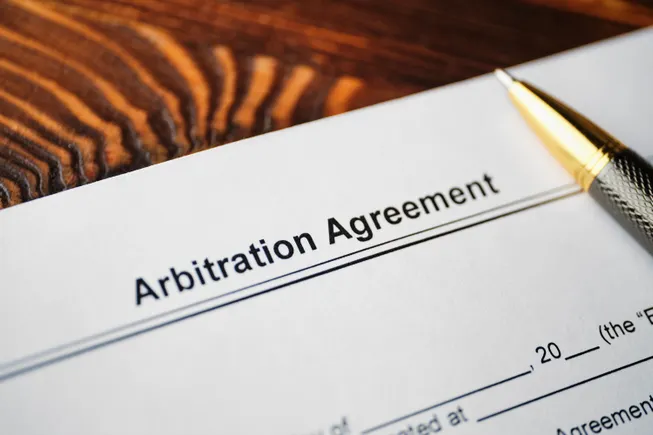
The U.S. Senate passed the Ending Forced Arbitration for Sexual Assault and Sexual Harassment Act, commonly known as the #MeToo bill, by voice vote on February 10. A week earlier, the House of Representatives passed another version of the bill by a resounding vote of 335 to 97. The bill's rapid, bipartisan progress through both chambers of Congress is seen as a powerful rebuke of forced arbitration, a corporate practice that many learned about during the #MeToo movement.
As its name suggests, the bill, which President Joe Biden is expected to sign at any time, applies only to sexual assault and sexual harassment claims. It invalidates arbitration agreements that prevent claimants from filing lawsuits and seeking relief in court.
Although the bill's text may be straightforward and concise, its passage has generated widespread attention in political and media circles, mostly positive. Senator Kirsten Gillibrand, a Democrat from New York and one of the bill's co-sponsors, called it "one of the most significant workplace reforms in American history." Time magazine called it "a milestone for the #MeToo movement."
With such strong support, will other uses of forced arbitration become the next target for abolition?
A brief history of forced arbitration
Before discussing its current state, it is necessary to understand why forced arbitration is so prevalent among employers. This practice stems from the Federal Arbitration Act of 1925, which allowed private dispute resolution through arbitration outside the judicial system. Typically, it is used between businesses as a cheaper and faster alternative to court rulings.
In 1991, the U.S. Supreme Court issued a landmark ruling in Gilmer v. Interstate/Johnson Lane Corp., upholding the enforceability of arbitration clauses involving age discrimination claims between employers and employees. This paved the way for employers to require employees to sign arbitration agreements—or employment contracts containing mandatory arbitration clauses—to avoid lawsuits.
This ruling was a game-changer for employers. Due to the private nature of arbitration, relevant data is difficult to obtain. However, according to estimates from the left-leaning Economic Policy Institute (EPI), the proportion of workers bound by forced arbitration rose from just over 2% in 1992 to about a quarter of the workforce in the early 2000s. According to the same analysis, the proportion of workers currently bound by forced arbitration has exceeded 55%.
In 2018, the Supreme Court ruled in Epic Systems Corp. v. Lewis that agreements requiring individual arbitration are enforceable under the Federal Arbitration Act. This ruling allowed employers to restrict workers from filing class-action lawsuits, instead requiring them to bring claims individually through arbitration.
How it works
An employee (or former employee) who decides to use arbitration typically contacts company leadership or an HR representative, who guides them in filing a claim. In the field of employment arbitration, two arbitration organizations dominate: the American Arbitration Association and JAMS Mediation, Arbitration and ADR Services.
Aaron Goldstein, a partner at the law firm Dorsey & Whitney, told HR Dive that if an employee first attempts to sue—as many workers initially do not realize they have signed a forced arbitration agreement—the company usually files a motion to stay the case based on the arbitration clause. The court then stays the case until the arbitrator makes a decision, or dismisses the case outright.
The process that follows often resembles a simplified court proceeding, but without a jury. It is typically handled by a single arbitrator, but in more complex cases, a panel of arbitrators may be formed. The claimant and the employer each submit their arguments.
"The next step usually involves a certain degree of discovery, just like in court," Goldstein said, such as collecting witness testimony and requesting and gathering documents. "Typically, the process is more streamlined than in court, and the arbitrator will work with the parties to develop an appropriate discovery plan for the specific case."
The discovery process ultimately leads to an arbitration hearing, which usually involves one to two days of arguments and testimony, followed by a decision from the arbitrator.
While the arbitration process often takes less time than the judicial route, it can still be quite lengthy. "I think resolving a dispute within a year is fairly typical," Goldstein said. "Often, you aim for shorter. It's just that reality often interferes—scheduling witness testimony... people are busy."
Finally, the arbitrator issues a decision—typically, if the arbitrator finds in favor of the employee, it concludes with some form of cash settlement.
Controversy and criticism
Arbitration offers many benefits to employers—privacy and cost-effectiveness are perhaps the most significant. But the process has also come under scrutiny and criticism from worker advocacy groups and other political organizations, and not only in cases of sexual harassment and assault.
Power imbalance is a factor in worker advocates' complaints. When two businesses enter into an arbitration agreement, they are often equal, or equally free to enter the agreement, and there is more likely to be negotiation.
But workers have historically depended on job opportunities far more than employers depend on them. "Who would risk a valuable job opportunity over an obscure procedural clause?" EPI questioned in a briefing document. As "forced" arbitration implies, if a worker refuses to sign such an agreement, they are likely to lose the job opportunity, or at least must weigh the risks of refusal.
Opponents also argue that arbitrators have an incentive to rule in favor of employers because employers hold the contracts and may bring repeat business. "Research finds that employees are less likely to win arbitration cases and receive lower damages in forced employment arbitration compared to court," wrote Alexander J.S. Colvin, a professor of conflict resolution at Cornell University's School of Industrial and Labor Relations and author of the EPI report.
Arbitration can also be framed as a DEI (diversity, equity, and inclusion) issue: EPI notes that women and Black workers are more likely to be bound by the practice.
"There's an old, dark playbook, which I call: keep quiet, pay it off, and move on. And there's a new playbook, which in my view is the only correct one: act quickly, act decisively, act openly. Then you have nothing to hide."
—Aaron Goldstein, partner at Dorsey & Whitney
Is there an "ideal" form of arbitration?
Goldstein said that one of the more harmful aspects of many arbitration agreements is the additional use of non-disclosure agreements (NDAs). Such policies require claimants to remain silent about their experiences as part of the agreement. Goldstein advises employers not to use NDAs, partly because they are "very bad for public relations."
"There's an old, dark playbook, which I call: keep quiet, pay it off, and move on," Goldstein said. "And there's a new playbook, which in my view is the only correct one: act quickly, act decisively, act openly. Then you have nothing to hide."
For example, in cases of harassment, retaliation, and other illegal conduct, employers can protect themselves by following established best practices: investigating claims, disciplining (sometimes firing) offending employees, and reaffirming company policy.
Using NDAs can also lead to large payouts, especially when claimants happen to have more resources and are well-represented. Goldstein noted that this sometimes leads to seemingly ironic support for NDAs from claimants' legal representatives, as it can result in higher settlements for their clients. While companies may want to avoid the PR disaster after a scandal—and may be financially well-off—NDAs can also be used to protect perpetrators and sustain a toxic culture that rarely stays hidden in the shadows for long.
Although forced arbitration is often unpopular with the public, it remains the path of choice for many employers, and the story of arbitration itself is more complex than it appears on the surface. Employees have reasons to choose arbitration, and employers have reasons not to.
"In the not-too-distant past, I represented plaintiffs myself, and in some cases plaintiffs wanted privacy—the privacy of arbitration," Christie Del Rey-Cone, a partner at the law firm Mitchell Silberberg & Knupp, told HR Dive. "In certain situations, they had various legitimate reasons for not wanting their stories to be publicly accessible."
On the other hand, employers who choose arbitration lose the opportunity to dismiss employee complaints through summary judgment—that is, a swift dismissal without a full trial under judicial review. Summary judgment dismissals are extremely common in employment law cases; for example, a 2013 analysis found that summary judgment was granted in whole or in part in 77% of employment discrimination cases.
Goldstein said that summary judgment is typically not used in arbitration cases because there is no jury. Arbitrators think "might as well hold a hearing." Kevin White, a partner at the law firm Hunton Andrews Kurth, told HR Dive that when summary judgment might be an alternative, going all the way to an arbitration hearing can sometimes be "as expensive and inefficient as going to court."
Employers focused on fairness, talent retention, DEI, and public reputation can choose to abandon forced arbitration altogether, giving employees a choice in how to handle complaints. For example, Google ended the practice in 2019.
Companies unwilling to completely eliminate the policy can follow Goldstein's advice and stop using NDAs.
What's next?
#MeToo was a once-in-a-generation movement, so will the political and social push to abolish forced arbitration stop at sexual assault and harassment cases?
It's hard to say.
Many Democratic members have expressed interest in abolishing the practice more broadly. In March of last year, Senator Richard Blumenthal, a Democrat from Connecticut, along with 39 other senators, introduced the Forced Arbitration Injustice Repeal (FAIR) Act, calling the forced arbitration process "rigged" against workers. The bill would also apply to forced arbitration in consumer, antitrust, and civil rights cases.
The FAIR Act has not progressed since its introduction in 2021, and it has been introduced multiple times since 2017 without much action. But the enthusiasm for the #MeToo bill may add momentum. Additionally, the bill has gained support from numerous advocacy groups, including Public Citizen, the National Organization for Women, and the National Disability Rights Network.
In announcing support for the #MeToo bill, the White House made clear its commitment to addressing forced arbitration more comprehensively. "The Administration... looks forward to working with Congress to develop broader legislation addressing these issues and other forced arbitration matters, including arbitration of claims of race discrimination, wage theft, and unfair labor practices," stated a memorandum from the Executive Office of the President.
"I think you'll continue to see the Biden administration try to expand the ban on arbitration and employment," White said. "And I think you'll continue to see states try to legislate... I think they'll try to get into general discrimination and wage and hour issues. But I think the attacks will come at the legislative level. Court cases are usually less successful. Courts generally support forced arbitration under the Federal Arbitration Act."
But even without legislative force, companies may decide on their own to abolish the practice. The balance in the labor market has shifted, and employers are looking for ways to attract workers. "In this labor market, people are really trying to attract talent," Goldstein said. "Anything that hinders people from joining... employers will discard."
Google abandoned the practice after pressure from employee activists, who organized a strike of about 20,000 workers and formed their own action group. Similar actions by employee activists at other companies could cause the dominoes to fall faster, but without significant pressure, "I don't think it will go too far too fast," Del Rey-Cone said.
"These cases can be emotionally intense and may involve sensational facts," she continued. "Employment claims come with various factors that make employers very eager to know they are shielded from media exposure, which can seriously interfere with the actual legal process and can also be highly disruptive from a business perspective."
