
OSHA Vaccine Emergency Standard Stayed: Employers Get a Reprieve, but Compliance Challenges Are Far from Over
On January 13, the U.S. Supreme Court decided to stay OSHA's COVID-19 vaccine emergency temporary standard, allowing some employers to pause mandatory vaccination plans. However, legal experts point out that workplace safety obligations remain unchanged, and OSHA may shift to a narrower permanent standard, compounded by variables such as state-level regulations, testing costs, and the definition of 'fully vaccinated,' making employer compliance challenges still complex.
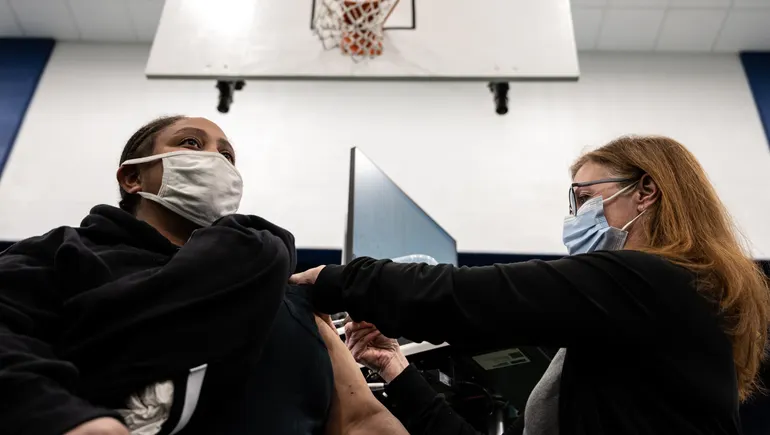
The U.S. Supreme Court ruled on January 13 to stay the Occupational Safety and Health Administration's (OSHA) emergency temporary standard (ETS) for COVID-19 vaccination. This decision was seen by some as a "breathing room," but legal experts caution that employers' compliance pressures related to vaccination have not ended.
"For those clients who were considering implementing mandatory vaccination solely because of the OSHA emergency standard, they can now breathe a sigh of relief," said Jennifer Platzkere Snyder, partner and co-chair of the labor and employment practice group at law firm Dilworth Paxson.
Since President Joe Biden first announced in September that OSHA planned to implement the emergency standard, employers have responded differently. Snyder added that some employers had already implemented mandatory vaccination, while others told employees they would comply with "vaccinate or test" requirements, but enforcement methods may not have been uniform.
"One of my clients said, 'We'll do what we need to do as required by OSHA... but we won't mandate anything,'" Snyder recalled. "'Unvaccinated individuals will be tested, and that's it.'"
The emergency standard would have imposed compliance burdens beyond written vaccination policies, including reporting employee vaccination status and implementing testing requirements.
Nevertheless, the Supreme Court's stay did not change employers' obligation to prioritize workplace safety, noted Kelly Yeates, vice president of service operations at human resources solutions company Insperity.
"The court's ruling does not relieve employers of their responsibility to ensure the safety of employees in the workplace," Yeates said. "This must be the starting point for any decision they make."
Even if employers decide not to move forward with mandatory vaccination, Yeates still recommends they clearly communicate this decision to employees, with a note that "the employer reserves the right to implement vaccination requirements in the future." She also advises employers to strengthen training for supervisors and frontline managers to be adept at listening to and responding to employee concerns.
Additionally, employers need to consider the impact of state and local requirements, potential future COVID-19 outbreaks, and the possibility that the federal government will revisit the issue.
OSHA's Next Move: A Narrower Permanent Standard?
The court's ruling may help clarify OSHA's intentions. This week, the U.S. Department of Labor announced it was withdrawing the emergency standard "as an enforceable emergency temporary standard" and asked the Sixth Circuit Court of Appeals to treat related legal challenges as moot. But the agency did not fully withdraw the standard—it remains as a "proposed rule" under federal law, suggesting OSHA may move forward with a permanent standard later this year.
Meanwhile, inNational Federation of Independent Business v. OSHAoral arguments, another potential path was foreshadowed: implementing one or more vaccination requirements for narrower occupational or industry scopes. Justice Amy Coney Barrett cited meatpacking plants, healthcare facilities, and dental clinics as examples where employees face higher risks of COVID-19 infection than in other settings.
Snyder mentioned that some clients have recognized this consideration. She cited an example of an employer who mandated vaccination for employees who must share small truck cabs with less than six feet of spacing. "That client implemented the mandate despite OSHA because they believed the testing option alone was insufficient to prevent outbreaks and workforce disruptions."
Susan Wiltsie, partner at law firm Hunton Andrews Kurth, said OSHA could develop narrower rules for high-risk workplaces, such as laboratories with direct contact with infectious diseases or places where employees work in close indoor contact, but the agency may still face challenges in meeting the "serious danger" threshold required to issue any future emergency standard.
"In some workplaces, because personal protective equipment (PPE) is already available, there may not be a serious danger," Wiltsie added. "I think that even if the Supreme Court leaves a window for narrower regulation, it does not mean there is a clear path to including mandatory vaccination."
Yeates believes OSHA will attempt to develop a narrower standard, but she questions the timing of such an announcement. Future pandemic phases may present different transmission levels than under the current Omicron variant.
Wiltsie also noted that regulators must address whether the public can access sufficient testing resources to comply with testing requirements for unvaccinated employees, especially given ongoing supply shortages. She added that employers may face state and local requirements to pay for COVID-19 testing for employees, as testing may fall under the category of mandatory medical examinations.
The Biden administration had previously announced requirements for insurers and group health plans to cover the cost of up to eight over-the-counter at-home COVID-19 tests per month for each covered individual. But Wiltsie said that testing quota "cannot be used for employment purposes."
In Snyder's view, scope was the biggest obstacle in OSHA's implementation of the existing emergency standard. "It took a one-size-fits-all approach, thinking it would be easier to determine who is covered and who must comply," she said. "While that simplified operations, it did not increase its chances of success."
The Complex Landscape at the State and Local Levels
Regardless of OSHA's next steps, several states have their own OSHA plans. Minnesota is one of the few states that explicitly said it would implement vaccination requirements consistent with the federal emergency standard. After the Supreme Court ruling, Minnesota OSHA announced it would pause enforcement of the standard pending further developments.
Snyder mentioned that one of her clients, headquartered in Minnesota with operations in other states, had implemented mandatory vaccination before the emergency standard's effective date. That client still has a significant portion of employees working remotely, but "has aggressive return-to-office plans in the coming months, so Minnesota OSHA's rule is in a wait-and-see state."
Meanwhile, California OSHA continues to advance its COVID-19 emergency standard, which requires employers to record employees' vaccination status, Yeates said. The state's latest version of the emergency standard took effect on January 14 and is valid until April 14.
In early December 2021, New York City expanded its vaccination requirement to all private sector employees in the city. The change took effect on December 27, 2021.
The Definition of "Fully Vaccinated" May Change
Other potential changes may be more subtle, such as the definition of "fully vaccinated." Yeates emphasized that employers need to stay informed about the current definition, "which will be determined by the course of the pandemic." As of press time, the U.S. Centers for Disease Control and Prevention (CDC) website defines the term as "an individual has received the primary series of COVID-19 vaccines."
Hawaii is considering changing its definition—which determines whether travelers need to quarantine upon arrival—to include booster shots, the state's governor said in a recent livestream.
The Tension at the Heart of the Controversy
Meanwhile, other jurisdictions have restricted employers' ability to implement vaccine mandates, a move that has also sparked employer debate. According to Ballotpedia, at least 20 states have some form of prohibition on vaccine passport requirements, but only a few of these directly apply to private employers.
"Many clients express frustration that 'something that should be scientifically supported has become a political hot potato,'" Snyder said. "This is very unsettling."
Employers must balance maintaining safety and health against the risk of losing employees due to mandatory vaccination or testing requirements. She also mentioned that employers must handle a "staggering number" of religious exemption requests, all layered on top of existing compliance considerations. "Employers are doing everything they can to prevent COVID-19 from spreading in the workplace and in the communities where they live and work, but this is not a simple question of whether to implement a mandate."
Since the Supreme Court ruling, Starbucks may be the most prominent large employer to abandon its "vaccinate or test" mandate. However, other companies have taken different stances. In a January 13 statement, Jay Timmons, president and CEO of the National Association of Manufacturers, described employee vaccination as "the best defense against COVID-19" and called for continued focus on vaccination to keep businesses operating.
Meanwhile, other federal vaccine mandates remain a consideration for employers. The Supreme Court lifted the injunction on the Centers for Medicare & Medicaid Services (CMS) vaccine mandate for healthcare workers, and some other employers may be subject to the Biden administration's vaccine mandate for federal contractor employees.
The Omicron outbreak has led some clients to close offices or temporarily return to remote work where possible, Snyder said. According to Yeates, clients have felt the impact of absenteeism due to employees contracting COVID-19 or needing to quarantine after close contact with positive cases.
"This is exactly where we need to be truly vigilant and not let our guard down," Yeates said regarding employers and the variant. Employers who fail to communicate transparently with employees risk damaging employee relations and corporate culture. "Although the current variant is generally milder in symptoms, there are still people in our workplaces who have experienced severe situations."
In the corporate world's response to vaccine mandates, the lack of consensus leaves employers "in different positions," Snyder said. She noted that while some employees want to avoid mandatory vaccination, clients have also encountered other employees who threaten to refuse to work if employers do not implement mandates.
"I think the tension employers need to address is: examining the nature of their business, job characteristics, overall business philosophy, and employee relations issues—these will determine what policies they develop in 2022 and beyond."