
Deep Dive
来自我们记者的行业洞察

Beyond FMLA: Can Federal Paid Leave Legislation Finally Land?
Federal paid family and medical leave proposals have repeatedly stalled in Congress. The Bipartisan Policy Center has established a new working group, co-chaired by bipartisan House members, aiming to introduce legislation within one to two years. However, experts are pessimistic about passing comprehensive legislation in the short term, with disagreements centering on funding mechanisms and administrative models. Meanwhile, 13 states and the District of Columbia have enacted their own laws, leaving employers facing an increasingly complex compliance puzzle. Modernizing FMLA itself, such as recognizing telehealth certifications and expanding bereavement leave, may become a more realistic breakthrough.
Workplace Antisemitism: The Evolution and Response to a Form of Hatred
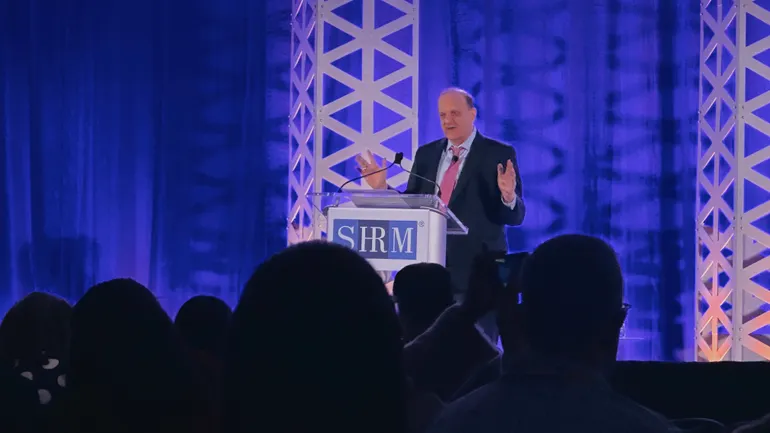
At the Society for Human Resource Management Employment Law and Compliance Conference held in Washington, D.C., Jonathan A. Segal, a partner at Duane Morris LLP, noted that contemporary antisemitism often manifests as conspiracy theories, historical denial, and so-called 'positive stereotypes.' He cited Anti-Defamation League data showing that in 2023, 85% of Americans believed at least one antisemitic statement, the highest level in decades. The conference also discussed the situation of Jewish employees in the workplace, hiring biases, and response strategies for human resources departments.

DEI is not dead, but evolving: experts interpret new trends in corporate diversity
Amid discussions of layoffs and cuts to DEI (diversity, equity, and inclusion) programs, experts point out that DEI is not dead but evolving. 2022 data shows a slight decline in corporate DEI investment, but practitioners believe DEI is emerging in new forms such as 'employee experience,' emphasizing the importance of trust and business integration.


Why Employee Benefit Plans Are Likely to Be Retained Amid the 2023 Budget Squeeze
In 2023, compensation and benefits teams face the challenge of balancing competitiveness with cost pressures. A Principal Financial Group survey shows that 70% of U.S. employers believe a recession is possible, but 52% will not cut benefits and 58% will not reduce salaries. Experts from WTW, Gartner, and other organizations point out that employers ensure benefit plans survive budget tightening through cost control, ROI justification, and a focus on mental health and financial wellness strategies.

Six DEI Trends to Watch in 2023: From Political Bias to Pay Transparency
In 2023, will diversity, equity, and inclusion (DEI) efforts be shelved? Research from Glassdoor executives, Monster, and Workhuman indicates that DEI may become the first target for corporate cost-cutting. However, job seekers increasingly value employers' DEI performance. HR Dive interviewed three workplace consultants and summarized six trends that will continue to gain momentum in 2023: political bias, humble learning, pay transparency, BIPOC retirement education, caregiver support, and veteran inclusion.

Five Major Human Resources Trends to Watch in 2023
In 2023, the human resources field will face new challenges and opportunities. Based on industry observations and expert interviews, this article distills five major trends: HR needs to proactively become a strategic partner to leadership; flexible work policies require HR to provide more support; amid economic uncertainty, a sense of purpose becomes key to retaining talent; internal talent mobility and skills redevelopment become priorities; and long-term commitments such as DEI need to maintain resolve under pressure.

Lawyers advise: Employers should 'take a deep breath' in response to FTC's non-compete ban
The U.S. Federal Trade Commission's (FTC) proposed rule last week to ban non-compete agreements may have caught employers off guard, but several lawyers interviewed by HR Dive believe the rule will face significant hurdles before it takes effect, including legal challenges and jurisdictional disputes. Lawyers advise employers to focus more on state law compliance at this stage rather than over-worrying about the not-yet-implemented federal ban.

Can a "Comprehensive Learner Record" Solve the Hiring Challenge?
The mismatch between resumes and actual abilities is a long-standing pain point in the recruitment field. The "Comprehensive Learner Record" (CLR) aims to provide more detailed proof of skills than traditional transcripts by recording learning outcomes both inside and outside the classroom. This article outlines the concept, technical foundation, and application prospects of CLR, as well as the standardization competition and system compatibility challenges it faces in promotion, and offers preliminary suggestions for corporate HR to try.

Retaining New Parents: The Key Lies in the Return-to-Work Phase
This article explores how companies can retain new parents by focusing on the employee's return-to-work phase. It cites survey data from LinkedIn and Censuswide in February 2020, noting that nearly half of mothers temporarily leave the workforce after childbirth for an average of about two years, and over half of those who return feel they have no choice. Experts suggest strategies such as cultural integration starting from pregnancy, providing lactation spaces and flexible working hours, considering bringing children to work or corporate childcare, to enhance employees' sense of belonging and retention rates.